Alcova Miami 2025
Presented during Miami Art Week, Alcova Miami 2025 transformed the Miami River Inn into a platform for experimental art and contemporary design, showcasing international studios, emerging designers, and site-specific installations.
During Miami Art Week 2025, Alcova returned for its third Miami edition, transforming the historic Miami River Inn, the city’s oldest hotel, nestled in East Little Havana, into a verdant and contemplative oasis of contemporary design and artistic innovation.
Founded in Milan in 2018 by curators Valentina Ciuffi and Joseph Grima, Alcova has quickly become one of the most exciting cross-disciplinary platforms in the international design landscape. True to its ethos, Alcova Miami reframes the typical fair experience: rather than a sprawling tent or convention centre, its more intimate setting of pastel-clad Victorian buildings, shaded courtyards, and timber corridors creates a layered spatial narrative, inviting visitors to wander, discover, and engage with ideas at their own pace.
From December 2–7, more than 40 international designers and studios unfolded installations and site-specific projects across the River Inn’s rooms and outdoor spaces. These works, ranging from material investigations and architectural interventions to sculptural seating and immersive environments, responded to the venue's unique character while probing deeper questions about craft, experimentation, and the future of making.
Amid the frenzy of Miami Art Week, Alcova Miami offered a quieter, more thoughtful counterpoint; a place where context, material, and creative inquiry could take centre stage. In the sections that follow, we highlight some of the most compelling works and voices that defined this year’s edition.
Kayam Studio — The Skin Collection: “Wrinkled”
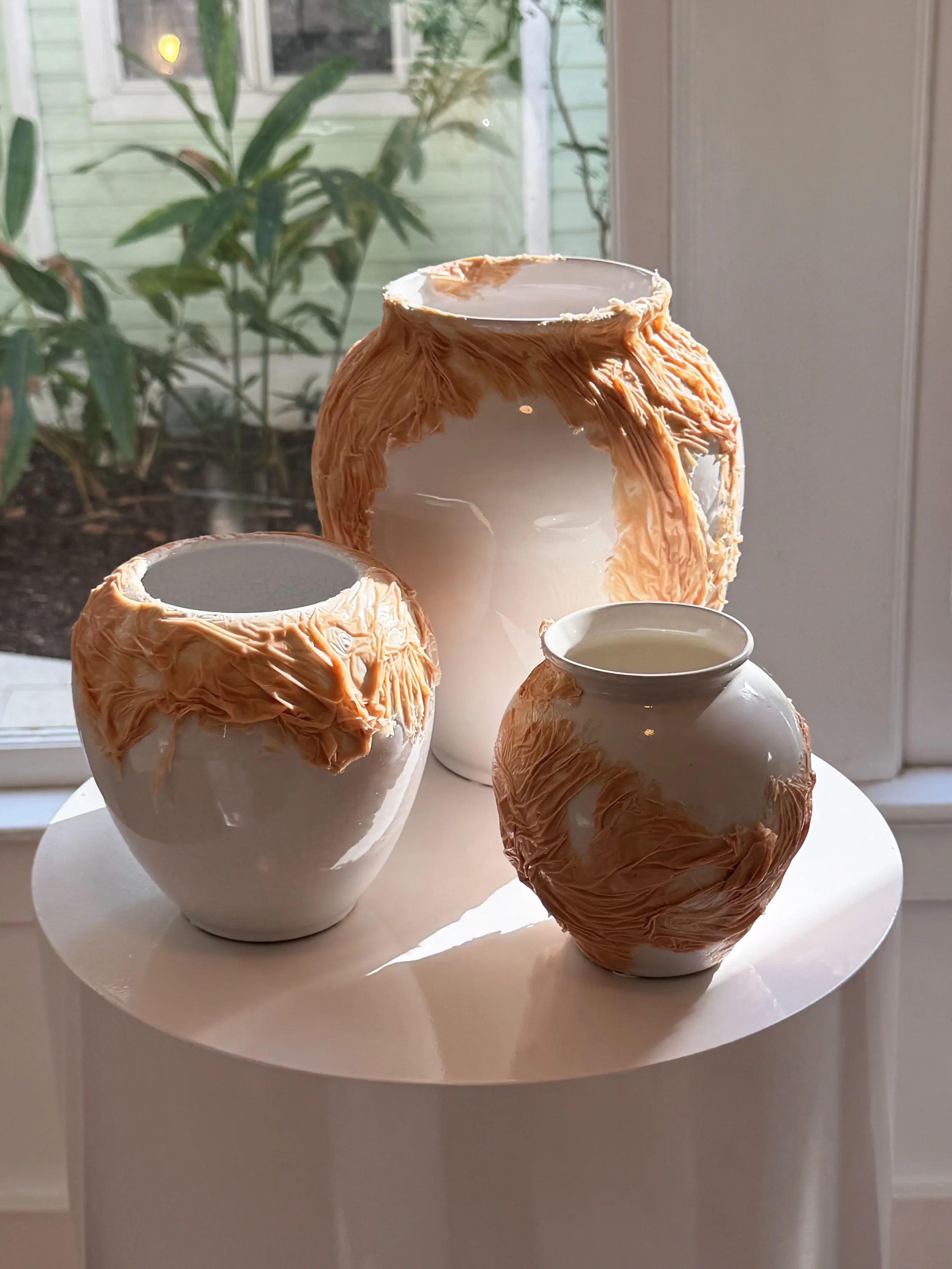
At Alcova Miami 2025, Kayam Studio presented The Skin Collection: “Wrinkled”, a series of objects that immediately command attention through their quiet intensity and unsettling beauty. Rooted in an exploration of skin as both a physical and a psychological boundary, the collection reflects on how skin functions as a visual vessel of identity, carrying markers of social status, body image, age, care, and neglect. Skinny or fat, young or old, maintained or weathered, these contrasts are read instinctively through the skin's surface, shaping perception long before language intervenes.
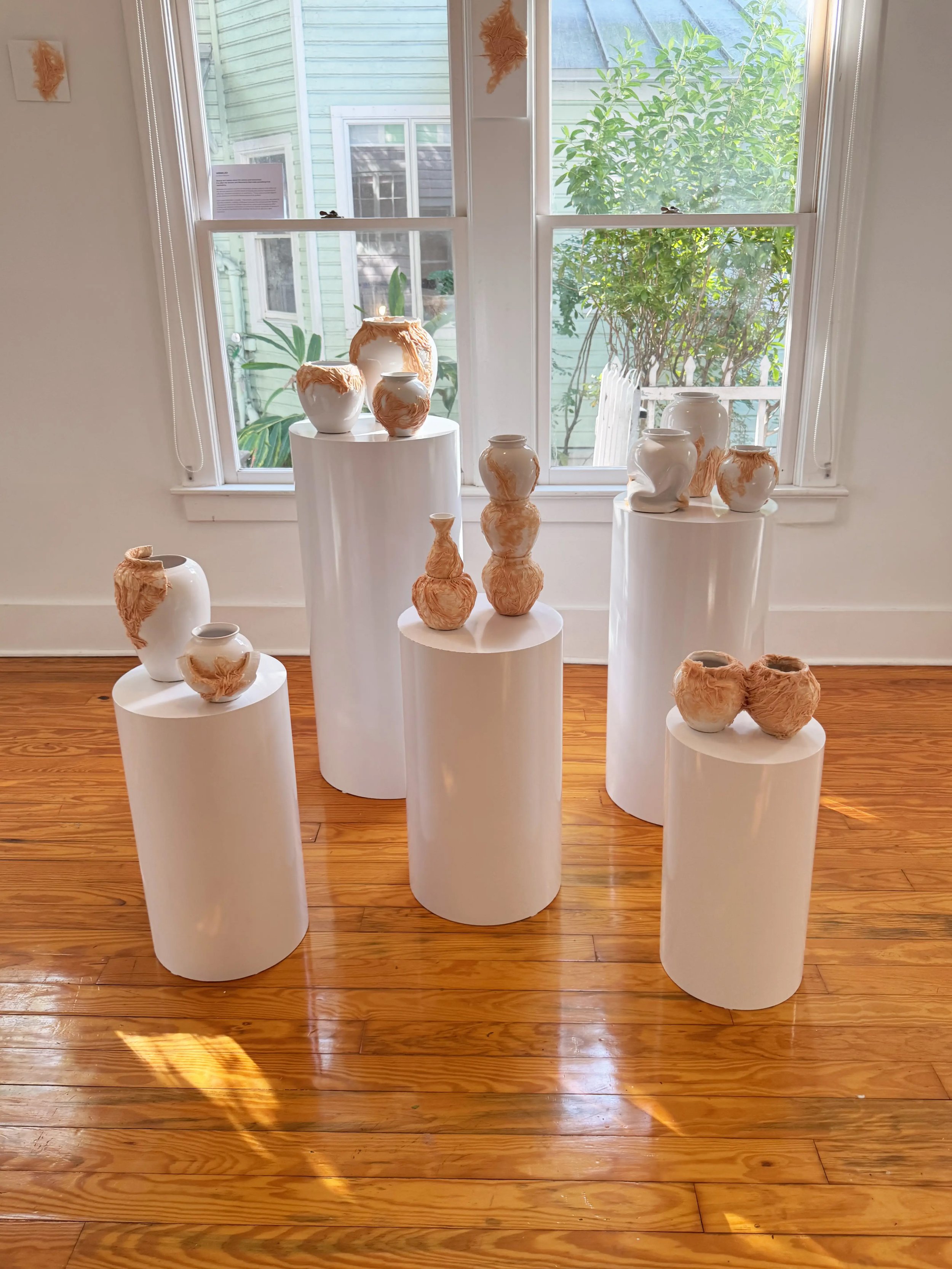
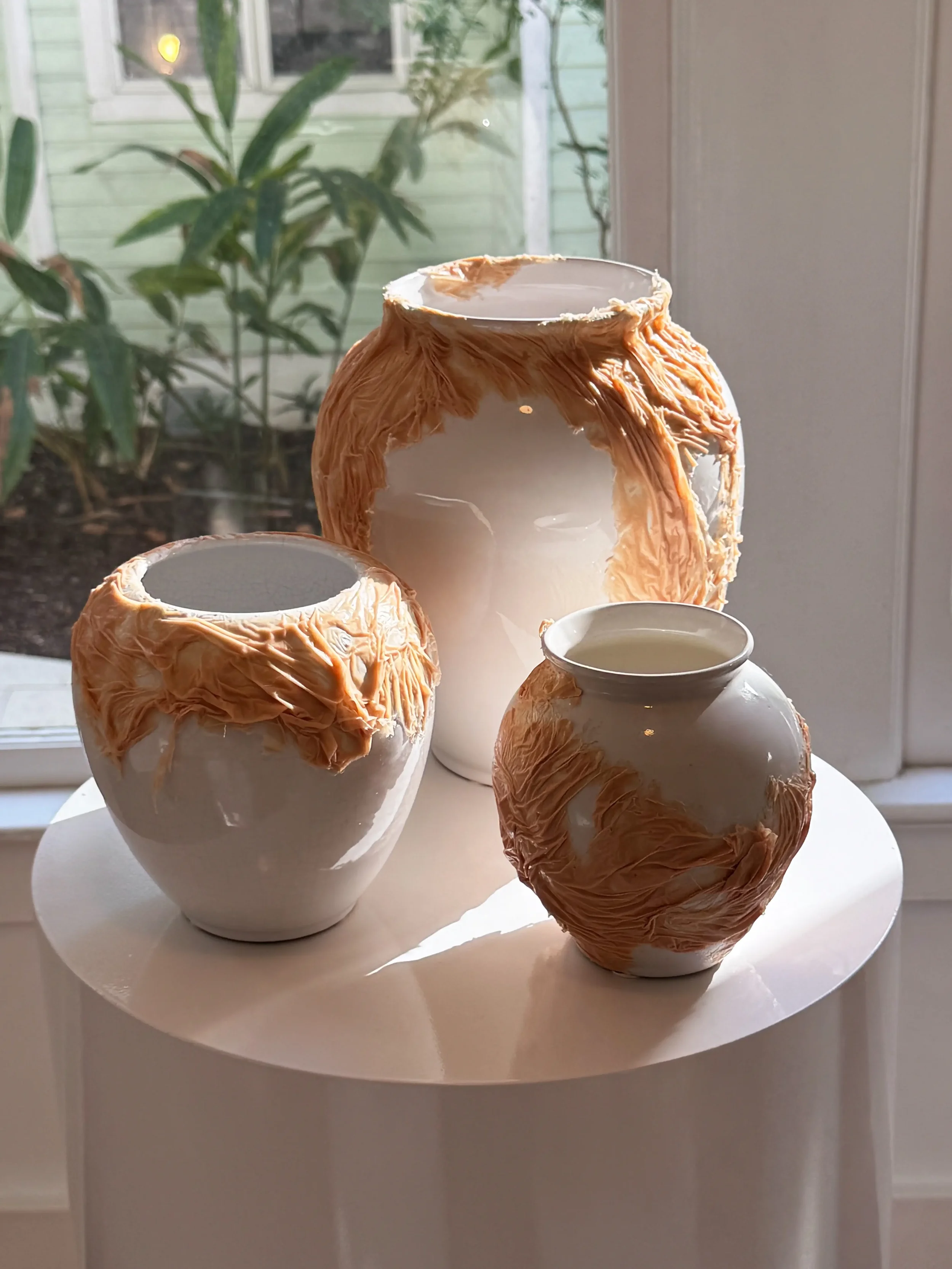
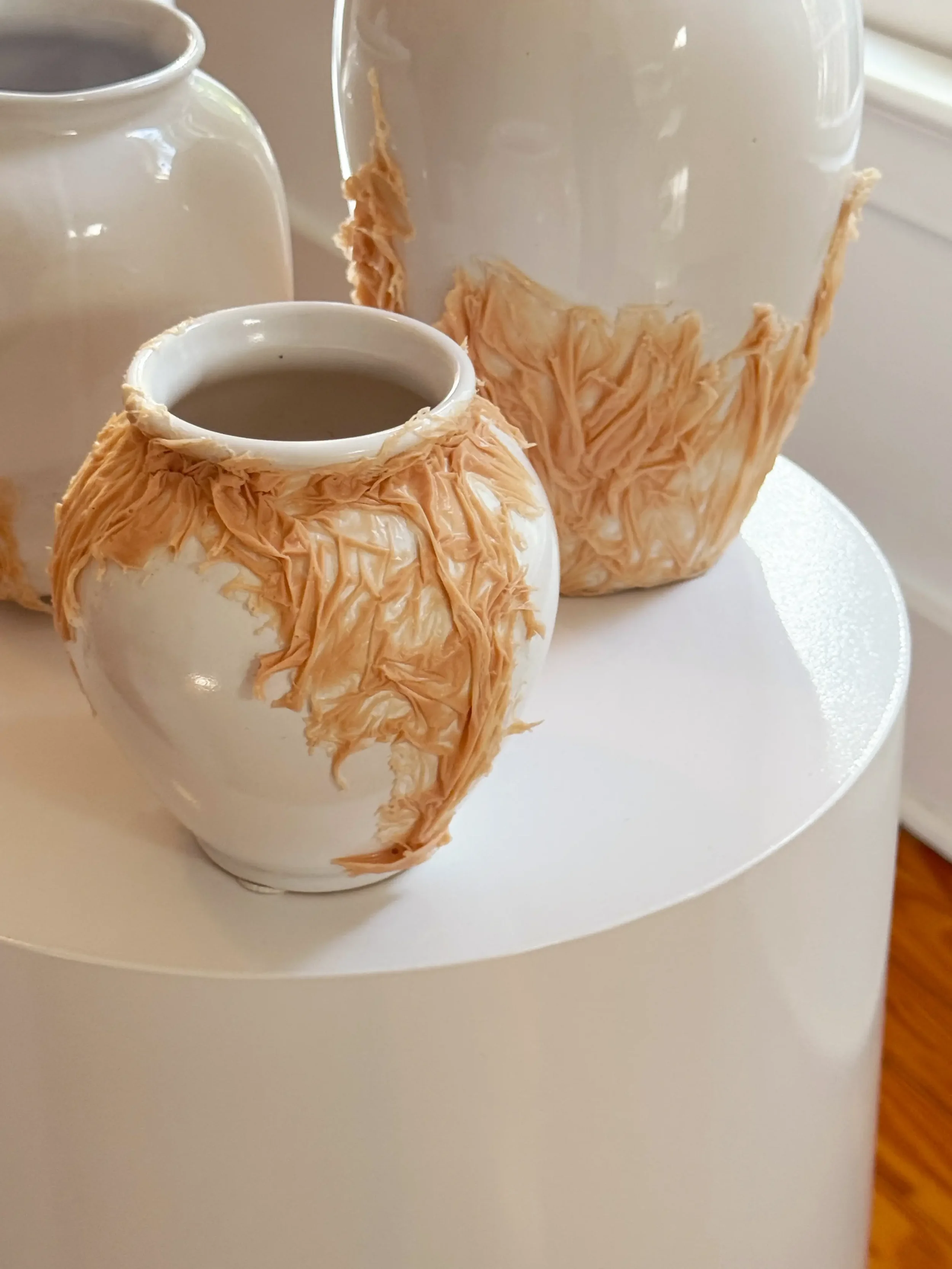
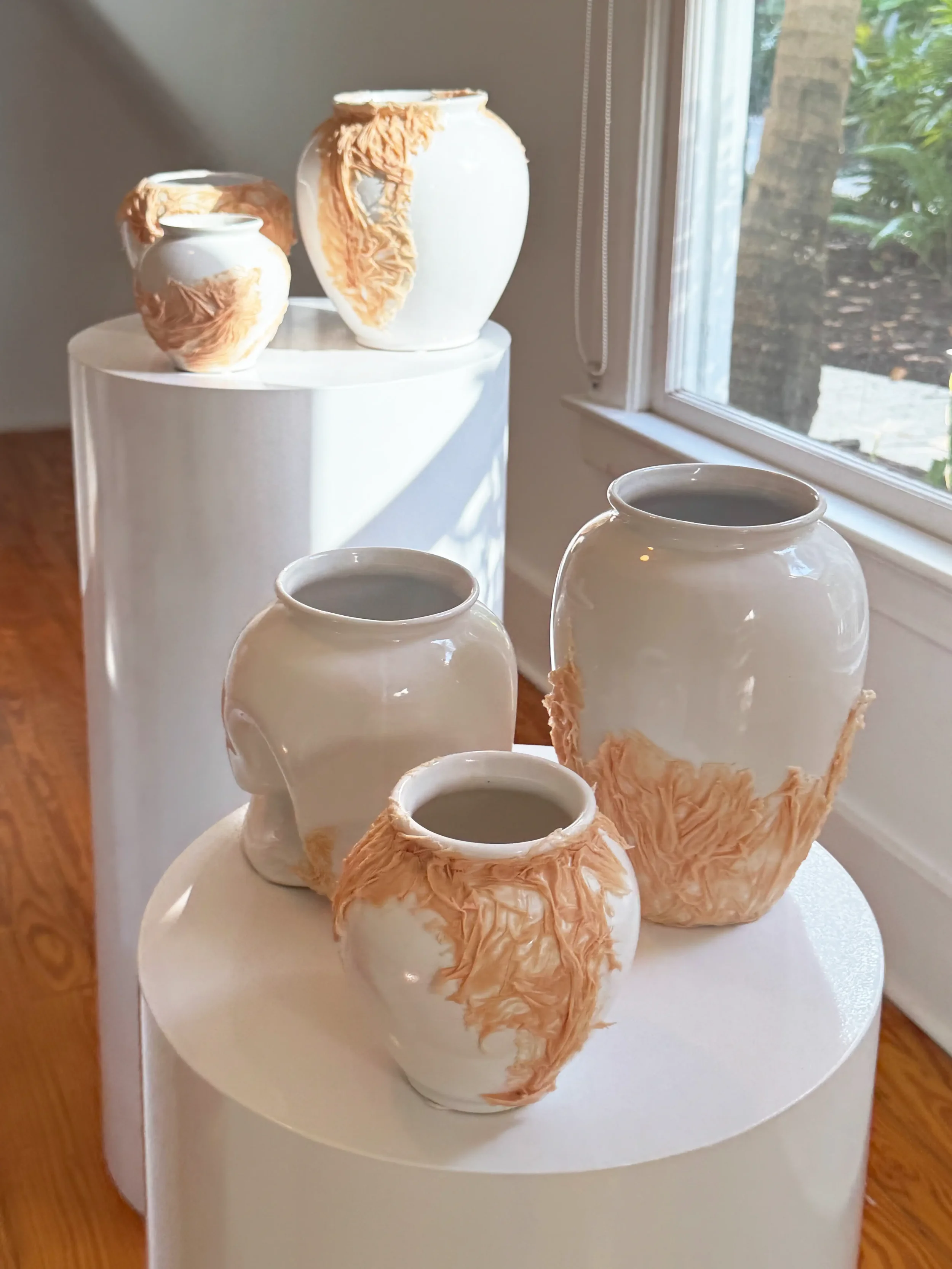
The objects themselves embody a tension that feels intrinsic to the material and form. Hybrids of attraction and repulsion, they challenge binary aesthetics by confronting the viewer with surfaces that feel deeply familiar yet profoundly recontextualised. Their restrained, almost minimalist forms deliberately direct attention to the texture and presence of the skin-like surfaces, where wrinkles, folds, and irregularities become the primary mode of expression.
What makes Wrinkled particularly compelling is the way this investigation extends beyond the human body. Kayam Studio frames skin as a broader term, applicable to plant life, animals, materials, and objects alike. In doing so, the collection blurs the boundaries between the organic and the constructed, prompting a visceral response that oscillates between discomfort and fascination. The result is a body of work that feels both unnerving and beautiful; a confrontation with familiarity, presented in a form we are not accustomed to seeing, yet cannot look away from.
Berto Sánchez — Facetas
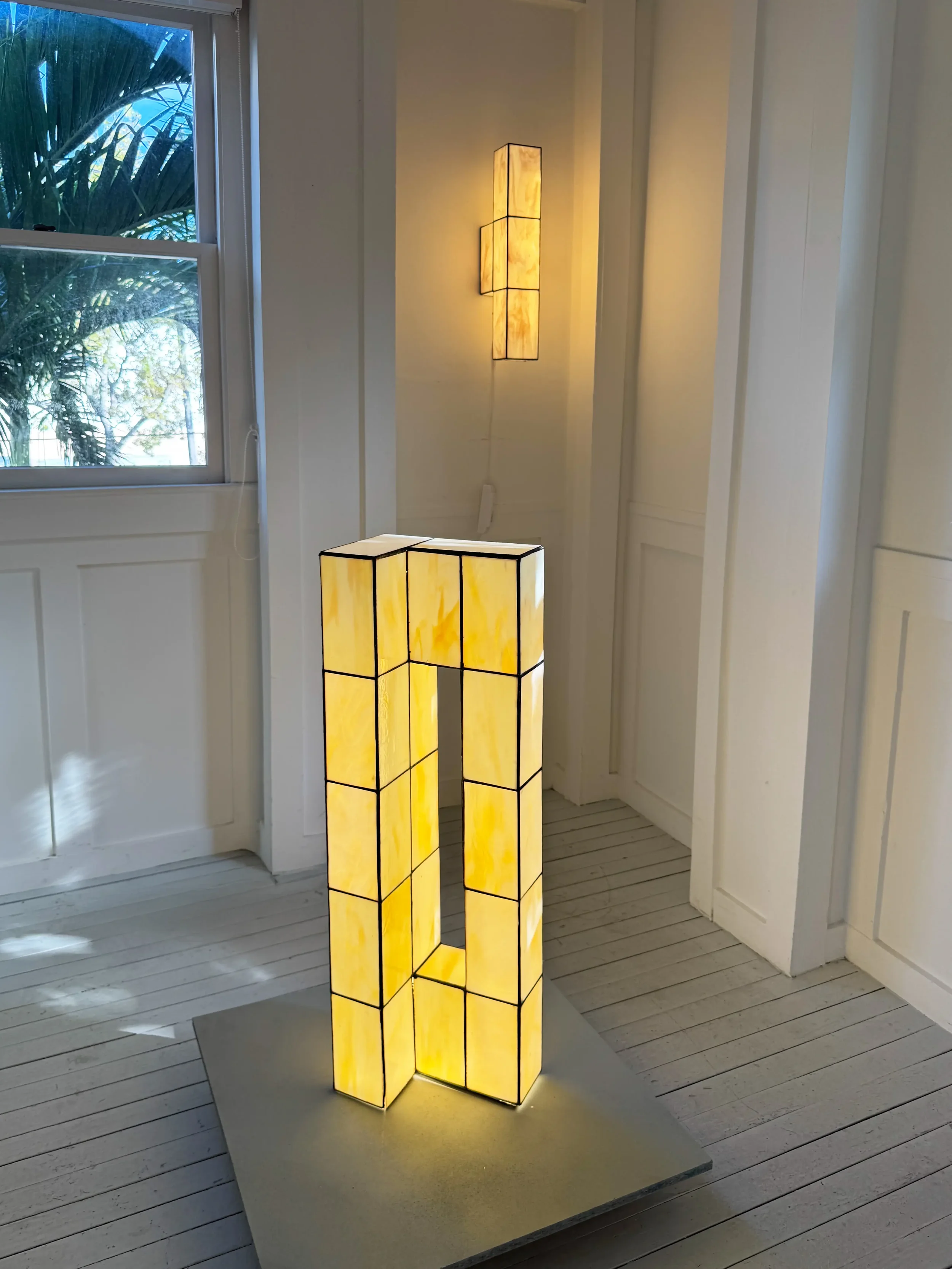
At Alcova Miami 2025, artist Berto Sánchez presented Facetas, a collection of five functional sculptures that beautifully blur the line between art and design. Inspired by the classic aesthetics of Tiffany lamps, the series reinterprets the traditional stained-glass technique through a distinctly contemporary lens, combining precise geometry with an evocative interplay of light.
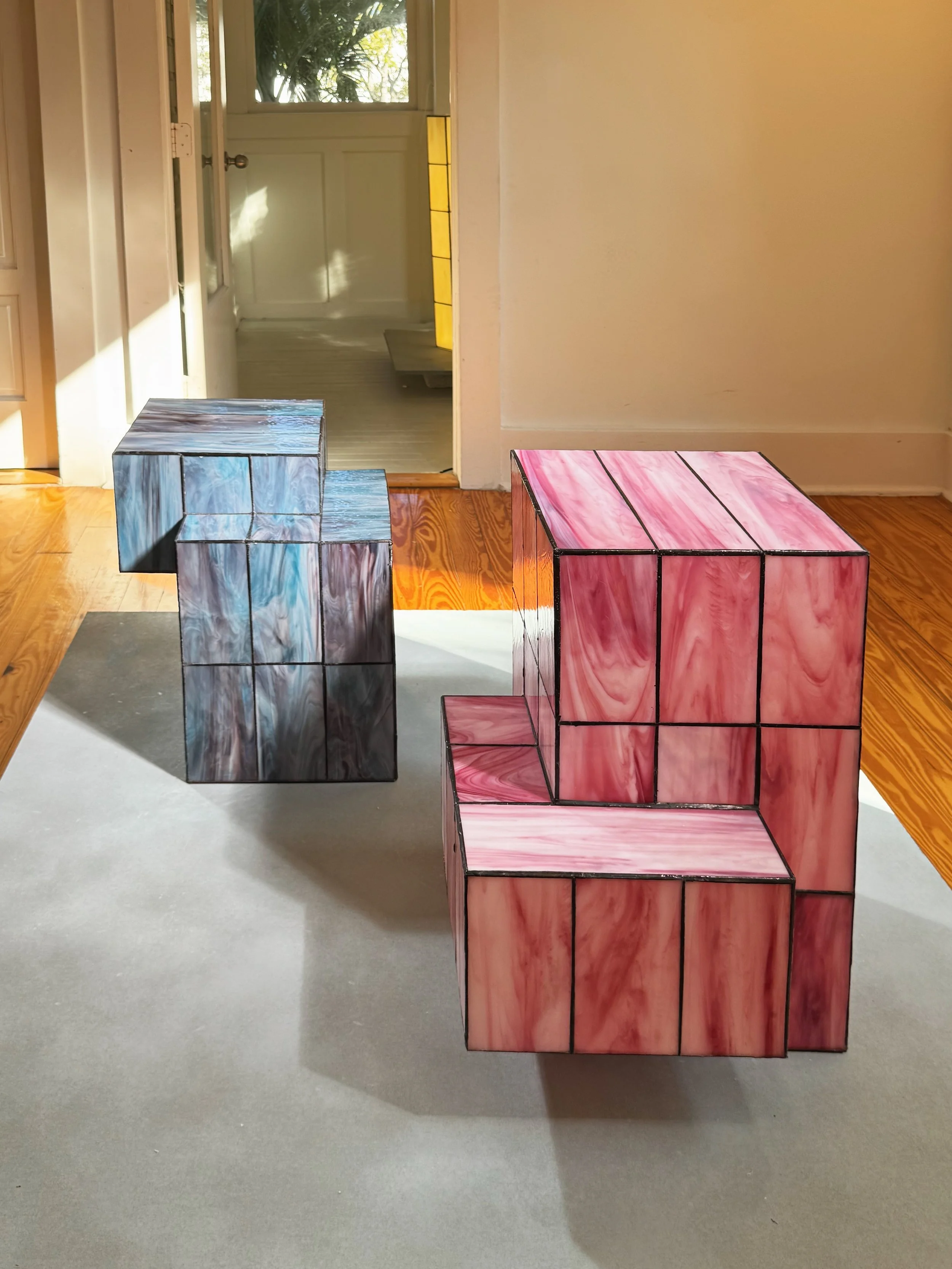
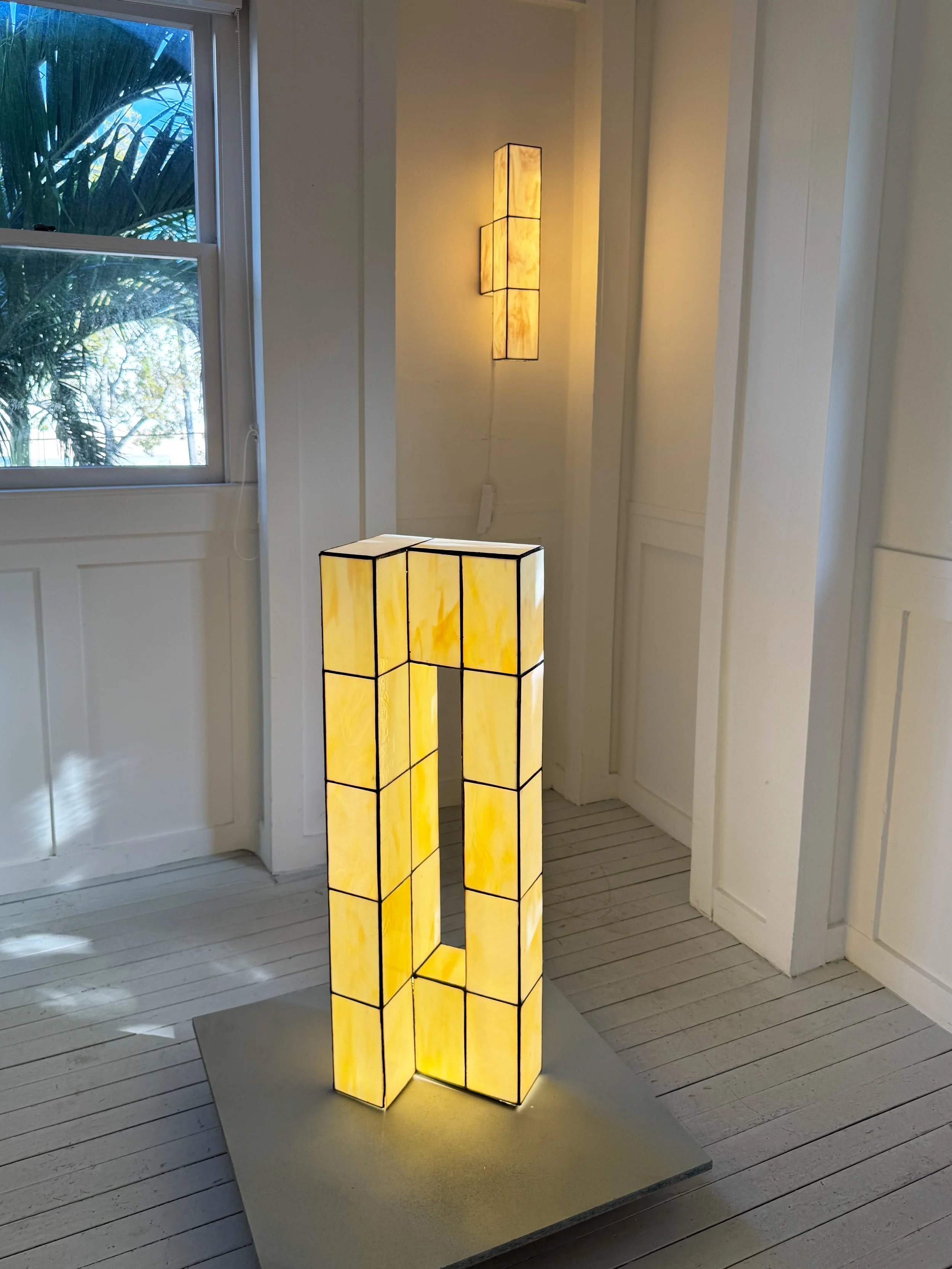
The name Facetas speaks to the richness and complexity of the Tiffany method itself, a process that brings together multiple pieces of glass to form singular, luminous objects. Sánchez embraces this layered construction, using light not only as an illuminative element but as a defining material in its own right. As illumination passes through the faceted surfaces, the pieces reveal shifting textures, tonal depth, and subtle variations that reward prolonged observation.
On a personal level, the collection stood out as one of the most alluring presentations of the fair. There is a quiet beauty in the way the works balance sculptural presence with functionality, never allowing one to overshadow the other. Instead, Facetas exists in a compelling in-between space, where material, light, and form converge to create objects that feel at once intimate, tactile, and timeless.
Casa AnKan — OASIS
Among the many compelling presentations, Casa AnKan’s OASIS emerged as a deeply resonant and personal highlight. The debut exhibition unfolded as a sensory refuge; a space where design invited pause, reflection, and tactile engagement.
Developed in dialogue with the fair’s curatorial direction, in collaboration with FKTR Group and Otto Tiles, OASIS redefined design as a place of return. Here, materials were not merely components but protagonists. Stone, glass, plaster, wood, and light were composed with quiet intention, transforming craftsmanship into something poetic and contemplative. Each object felt grounded yet expressive; a vessel for both imagination and material honesty.
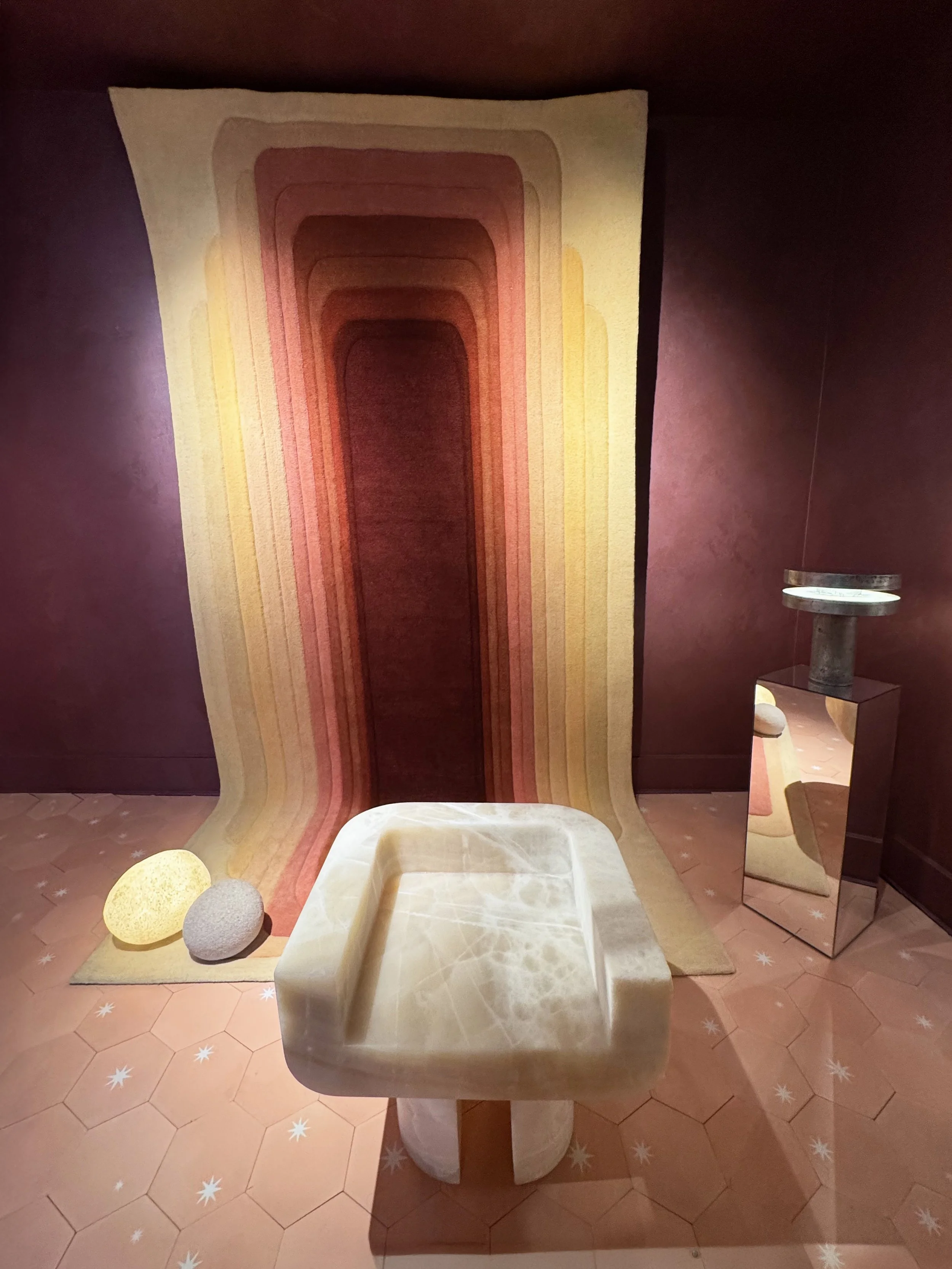
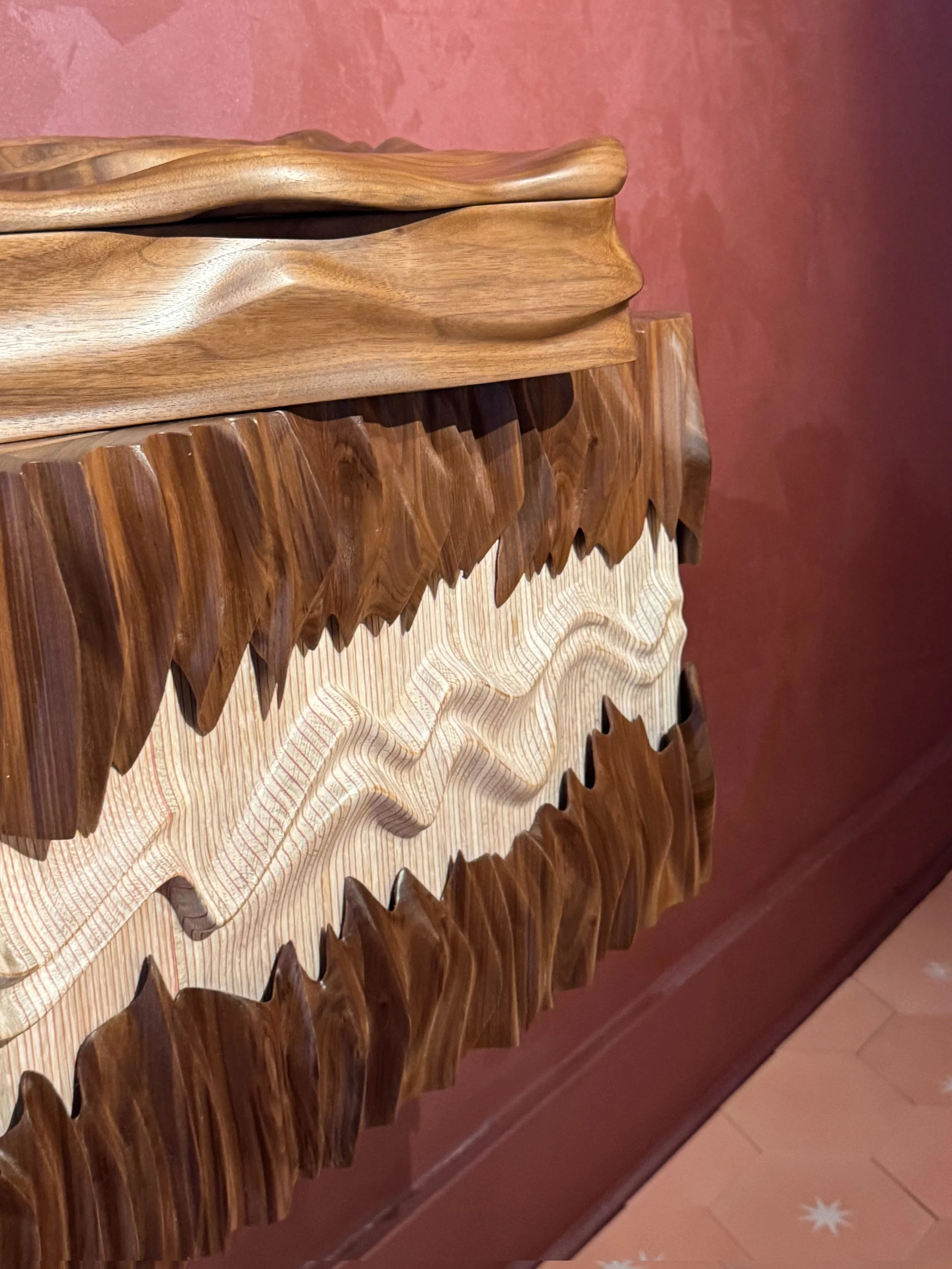
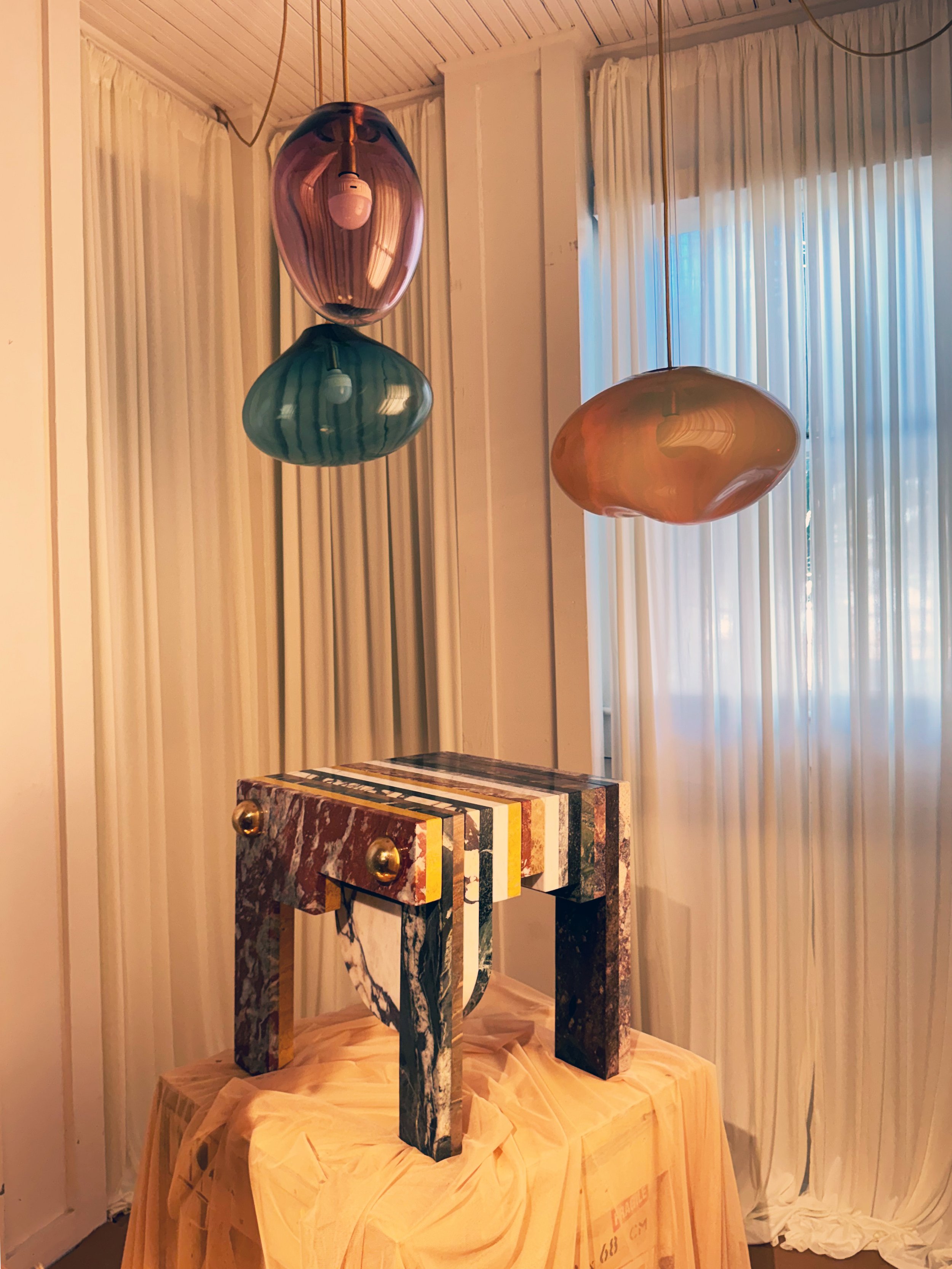
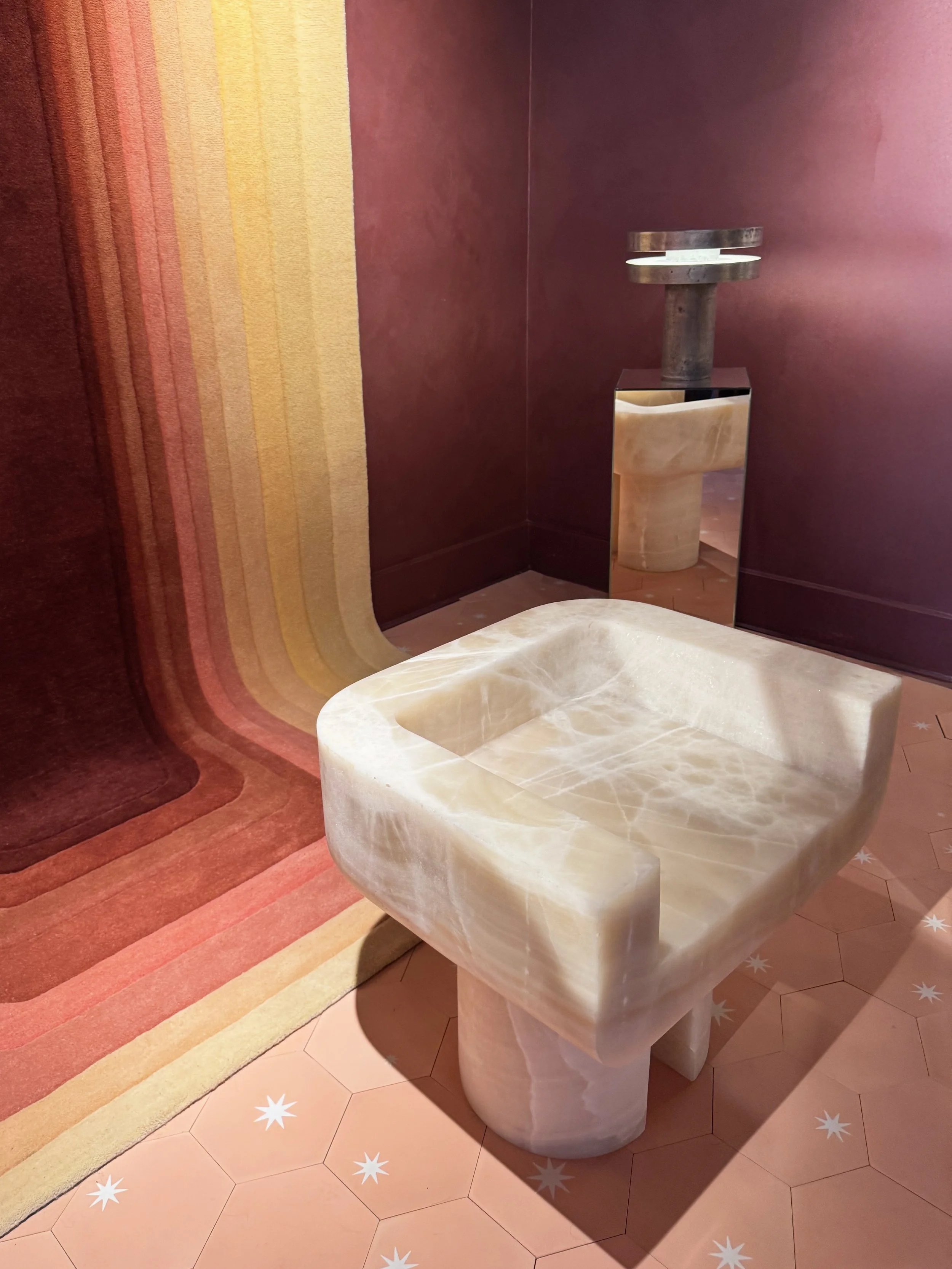
The furniture and sculptural works on display stood out for their extraordinary tactility. Visually striking yet deeply rooted in craft, every piece functioned as an artwork in its own right, rewarding close inspection through surface, texture, and construction. It was this balance, between sculptural beauty and material intelligence, that made the presentation feel so complete and compelling.
OASIS brought together a thoughtful selection of artists and designers from the United States and beyond, each contributing a distinct voice to Casa AnKan’s evolving narrative of collectable design. Limited-edition works by Amorph, Eloa – Unique Lights, Esther Knopfler, Alia Vitæ, JT. Pfeiffer, Sanaa Design, and Monolith formed a cohesive yet varied dialogue, reinforcing the exhibition’s immersive and introspective atmosphere.
As a whole, Casa AnKan’s Alcova presentation felt less like a display and more like an experience; one that lingered long after leaving the space, anchored by material depth, human touch, and an unwavering commitment to craft.
Palaty Gallery — GRUZ by Irina Razumovskaya
Palaty Gallery presented GRUZ, a deeply contemplative project by Irina Razumovskaya exploring the meaning of home in an era shaped by displacement and migration. The series reflects on the emotional landscape of those who have left Russia, a community suspended between nostalgia and estrangement, where home exists both as a cherished memory and an elusive abstraction.
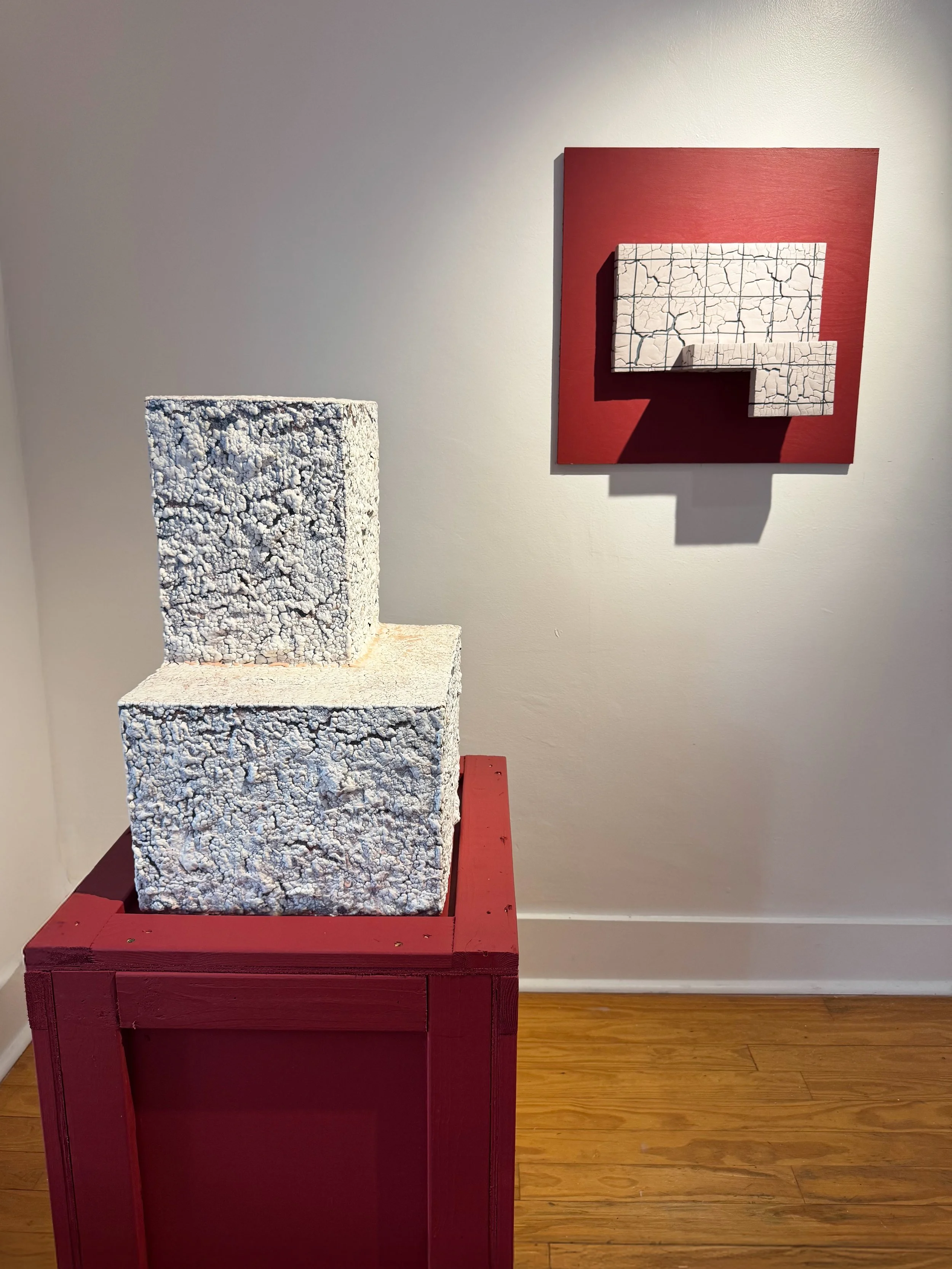
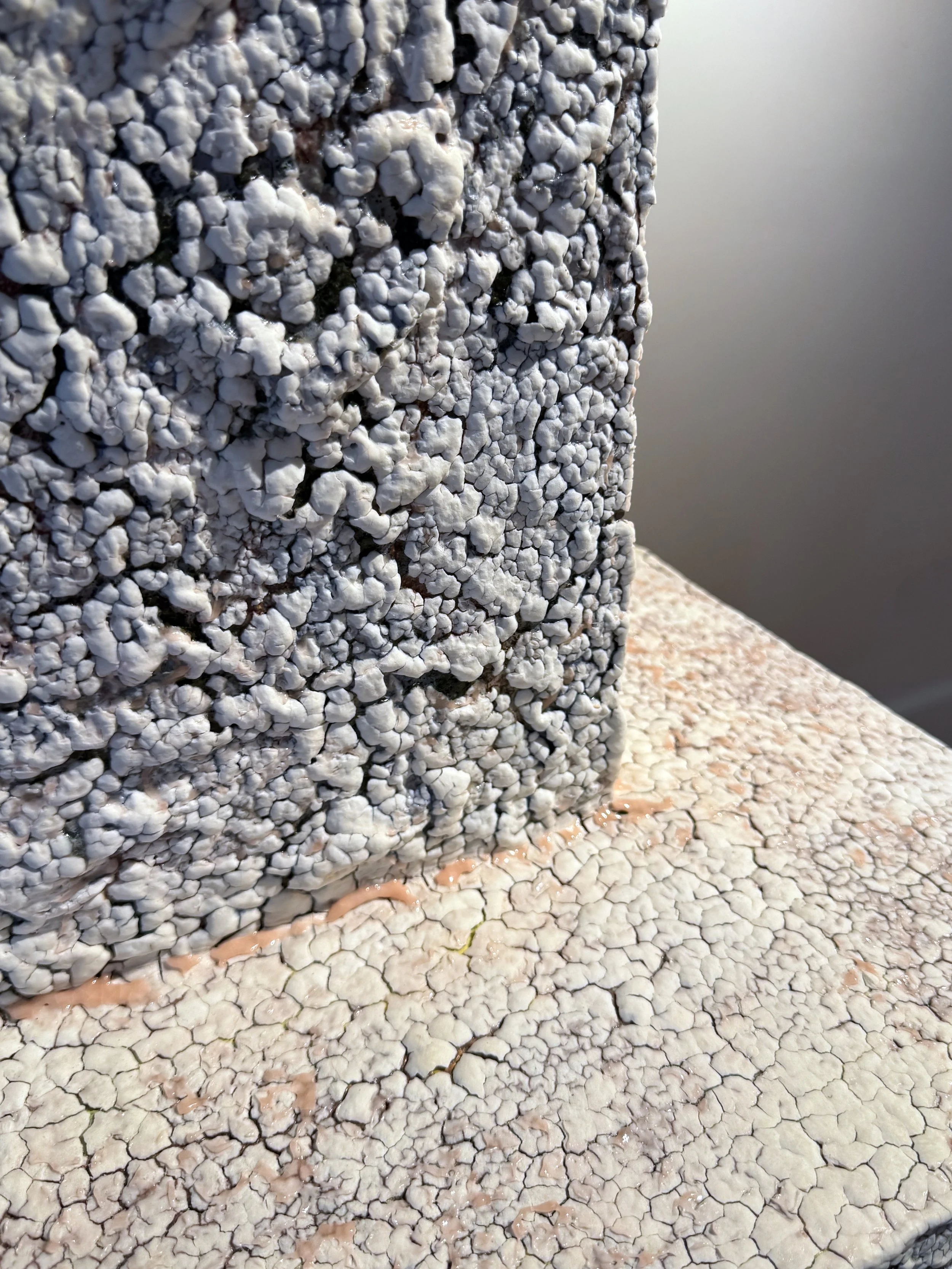
Razumovskaya’s sculptural works hover elegantly between architecture and object, function and symbolism. Inspired by the monumental forms of early Soviet constructivism, the pieces possess thick, grounded bodies that evoke the weight of attachment, buildings that cannot be carried, yet objects that will continue to inhabit new homes. In this subtle gesture, sculpture becomes quietly useful again, art performing alongside life rather than apart from it.
What makes GRUZ particularly compelling is the way it embodies both permanence and transience. The forms speak to heaviness and rootedness while simultaneously acknowledging adaptability and movement, suggesting that belonging may not be fixed to a single place but to the ongoing life that surrounds it. The series is both thought-provoking and quietly poetic, a meditation on home, identity, and the resilience of human connection.
ERM Studio — Ciénaga Vidrio
Mexico-based ERM Studio expanded the experimental spirit of their Ciénaga series into the realm of glass with Ciénaga Vidrio. This collection of modular luminaires and a credenza explores the material’s fluidity and luminosity through the “ladling” technique, a process where molten glass is poured with a careful balance of control and intuition. Each gesture is captured and solidified, creating forms that feel alive, yet frozen in time.
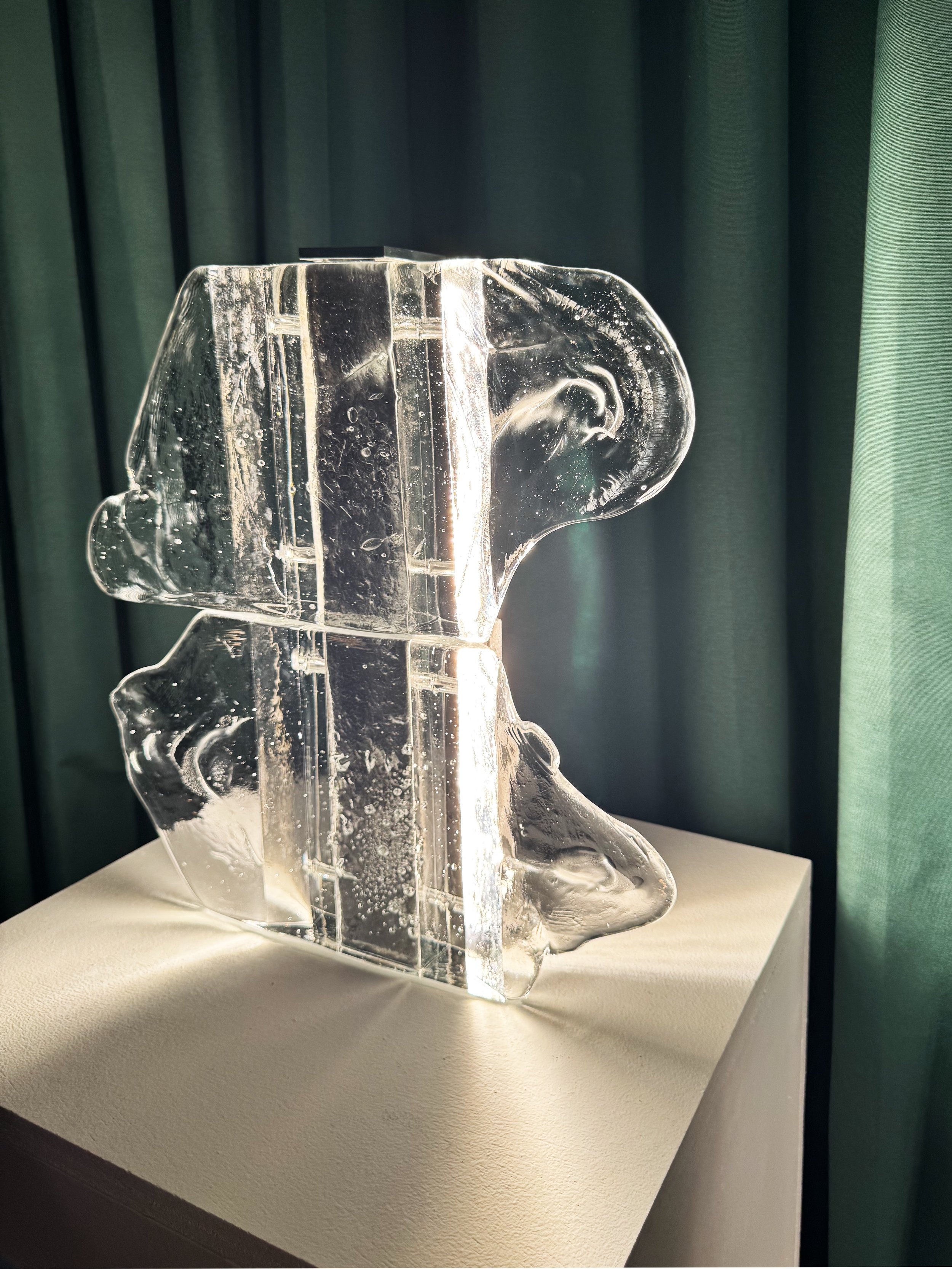
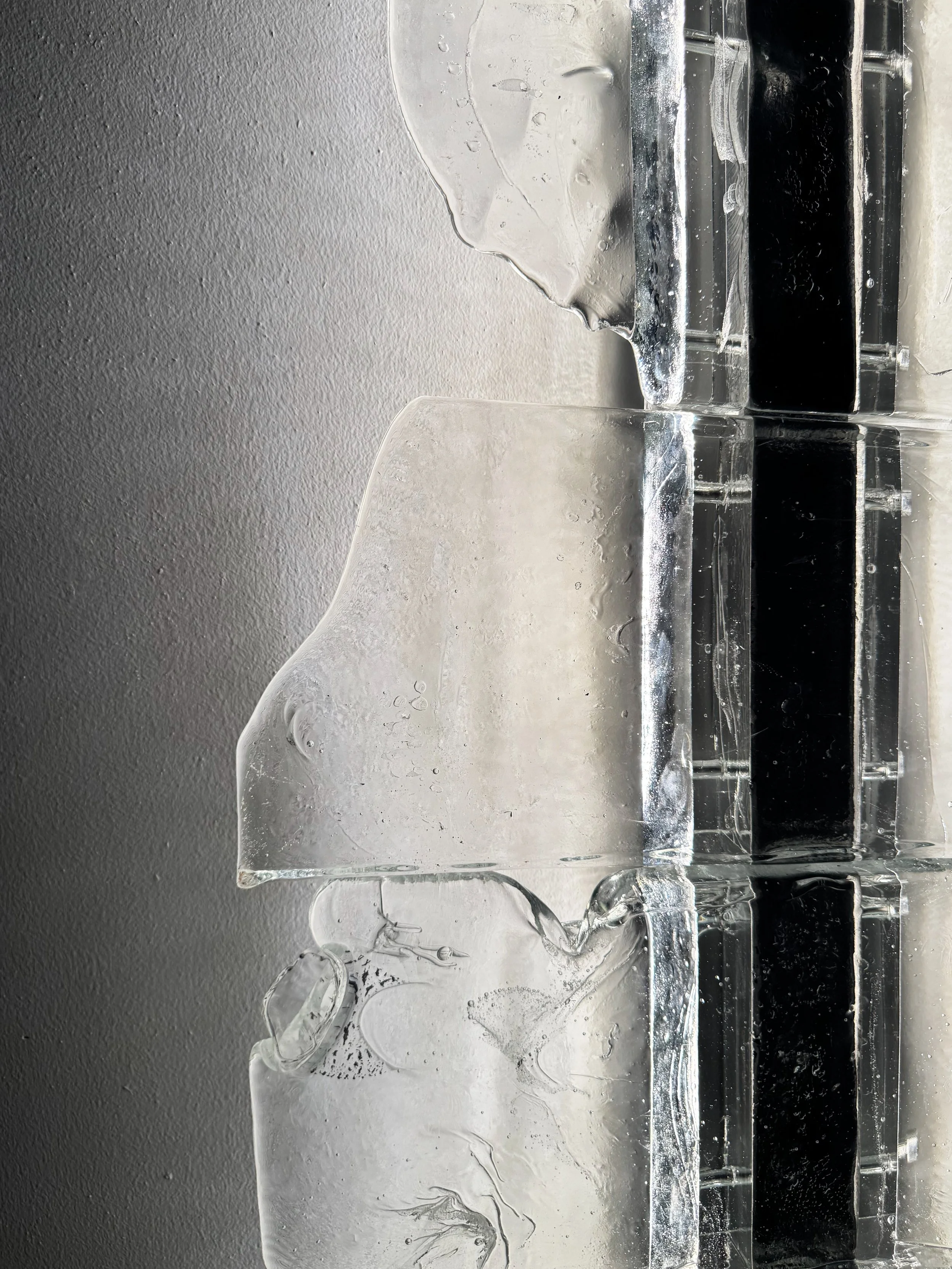
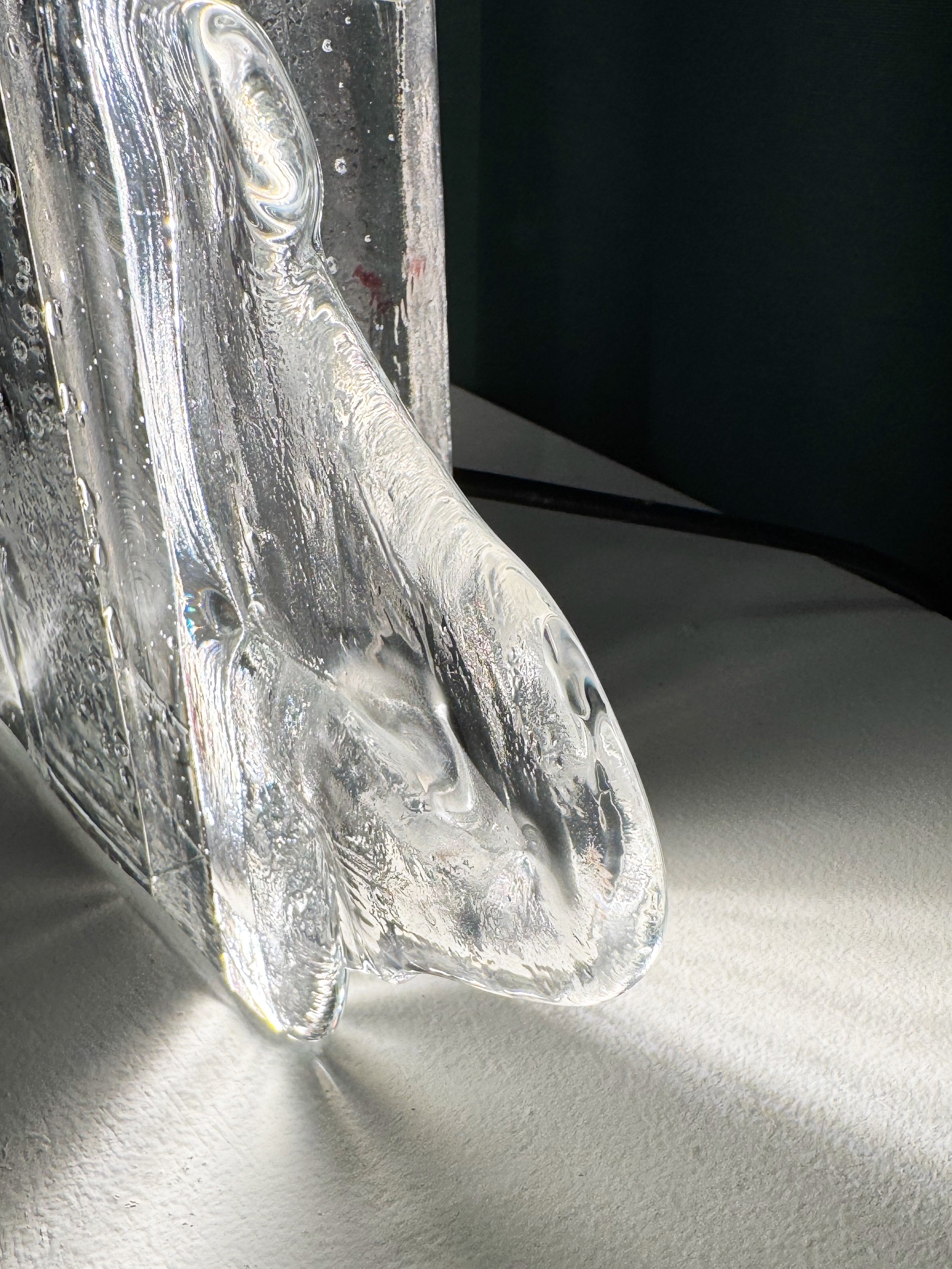
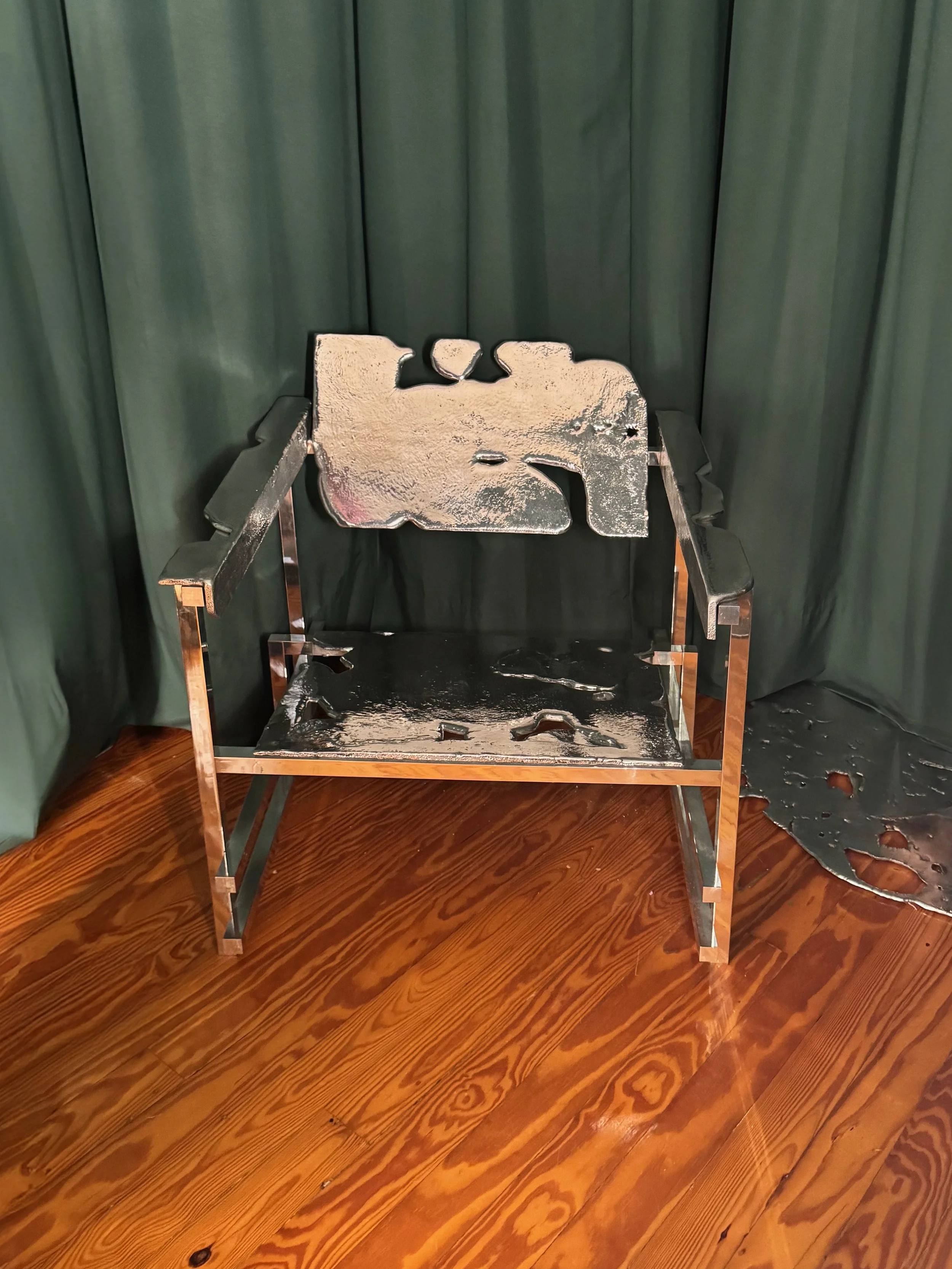
Steel moulds imprint delicate textures onto the glass surfaces, shaping how light refracts and interacts with the surrounding space. The resulting interplay of reflections, shadows, and optical distortions transforms each piece into more than an object; it becomes a dynamic participant in its environment. The fluidity of the works is mesmerising, particularly when illuminated: light dances across the surfaces, revealing textures, curves, and even subtle imperfections, each caught moment radiating a dramatic, almost hypnotic effect.
Ciénaga Vidrio exemplifies ERM Studio’s dedication to preserving a dialogue between process, material, and form. Each piece balances technical mastery with a strikingly organic presence, offering a poetic intersection of sculpture, design, and light that lingers in the memory long after leaving the space.
Dace Sūna — Sky, Sea, and Elemental Forces
Latvian designer Dace Sūna showcased a striking exploration of space, light, and the natural elements at Alcova Miami 2025, merging scientific observation with poetic expression. Her practice draws deeply on nature and the elemental forces of gas, fire, water, earth, and plasma, transforming these inspirations into works that are both contemplative and visually captivating.
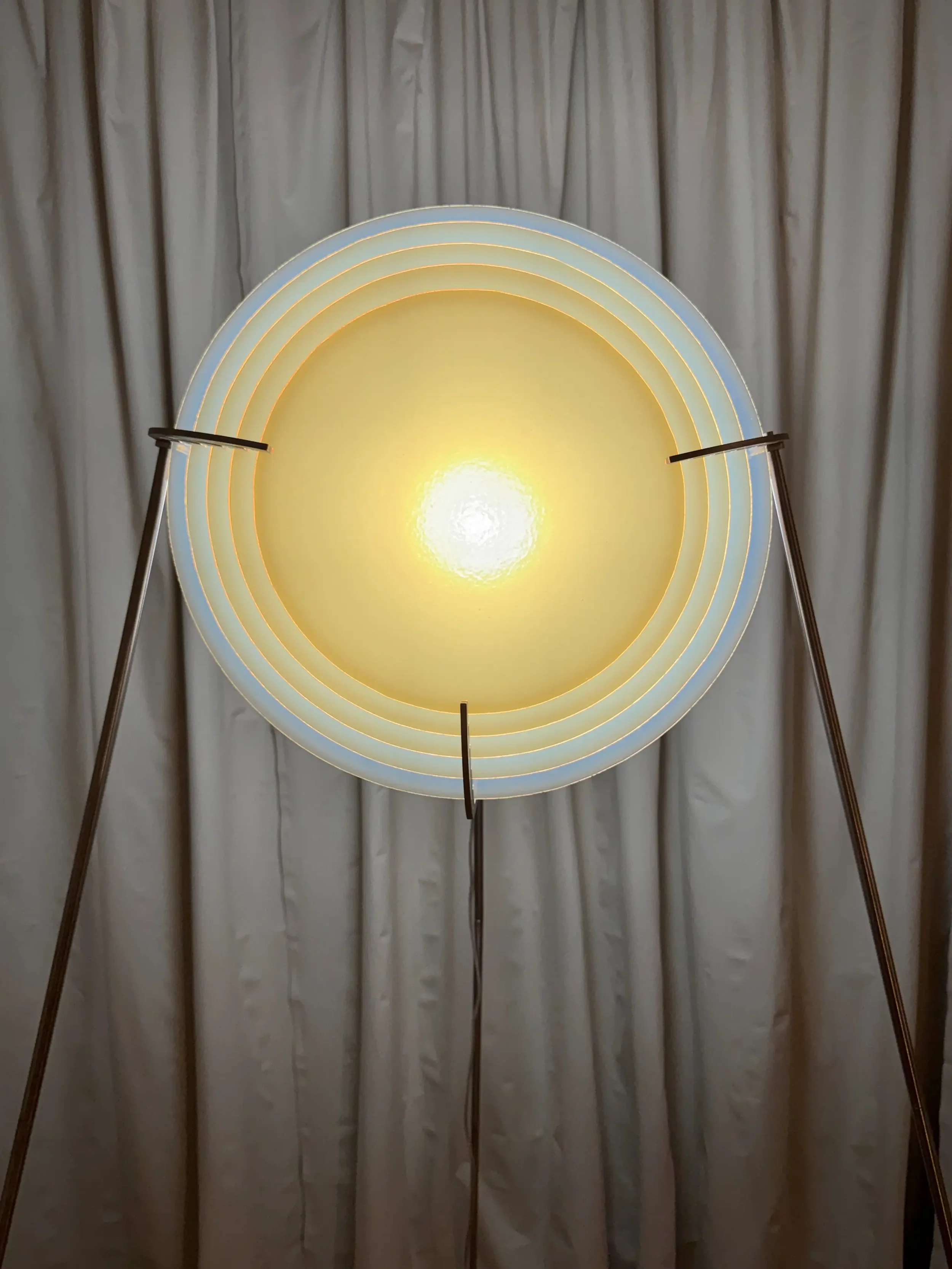
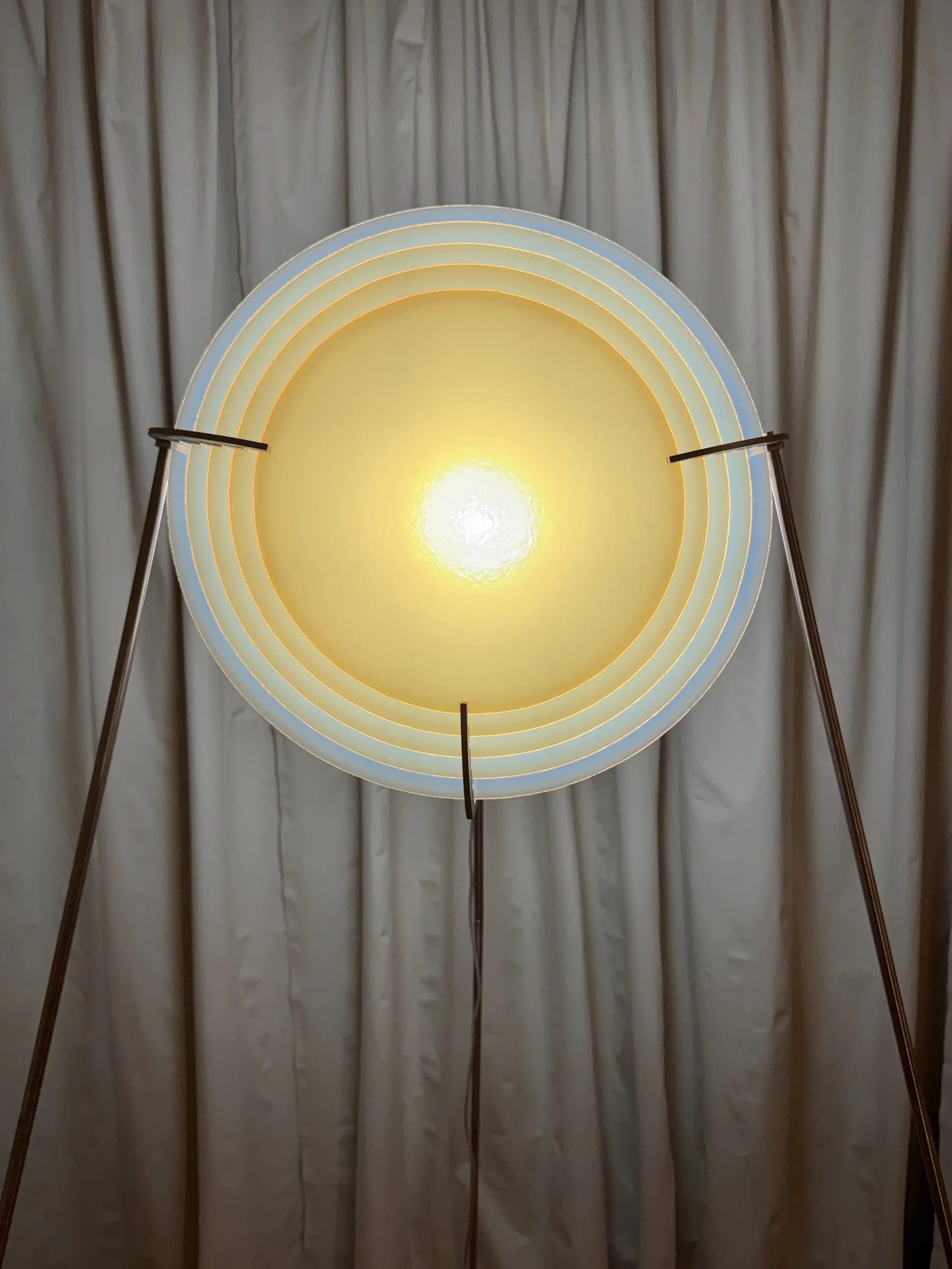
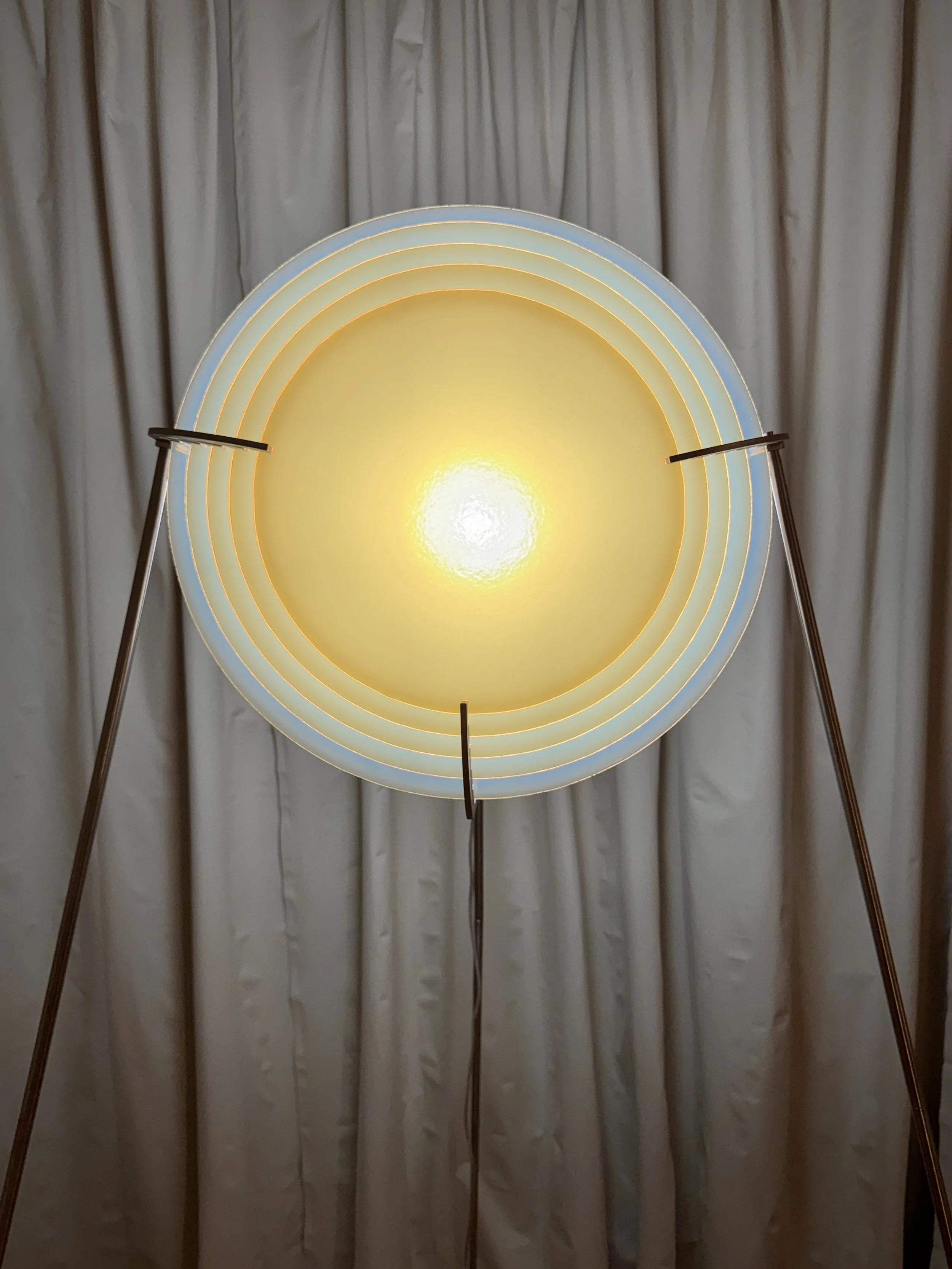
Highlighted pieces included SKY-SET, a layered opalescent glass light that captures the shifting colours of the sky, from cool blues to sunset reds, through a process inspired by Rayleigh scattering. Its circular form references dendrochronology, evoking tree rings that trace the passage of time and environmental change. The work embodies both the wonder of the atmosphere and the consequences of climate events such as pollution and forest fires, urging a mindful reconnection with our planet.
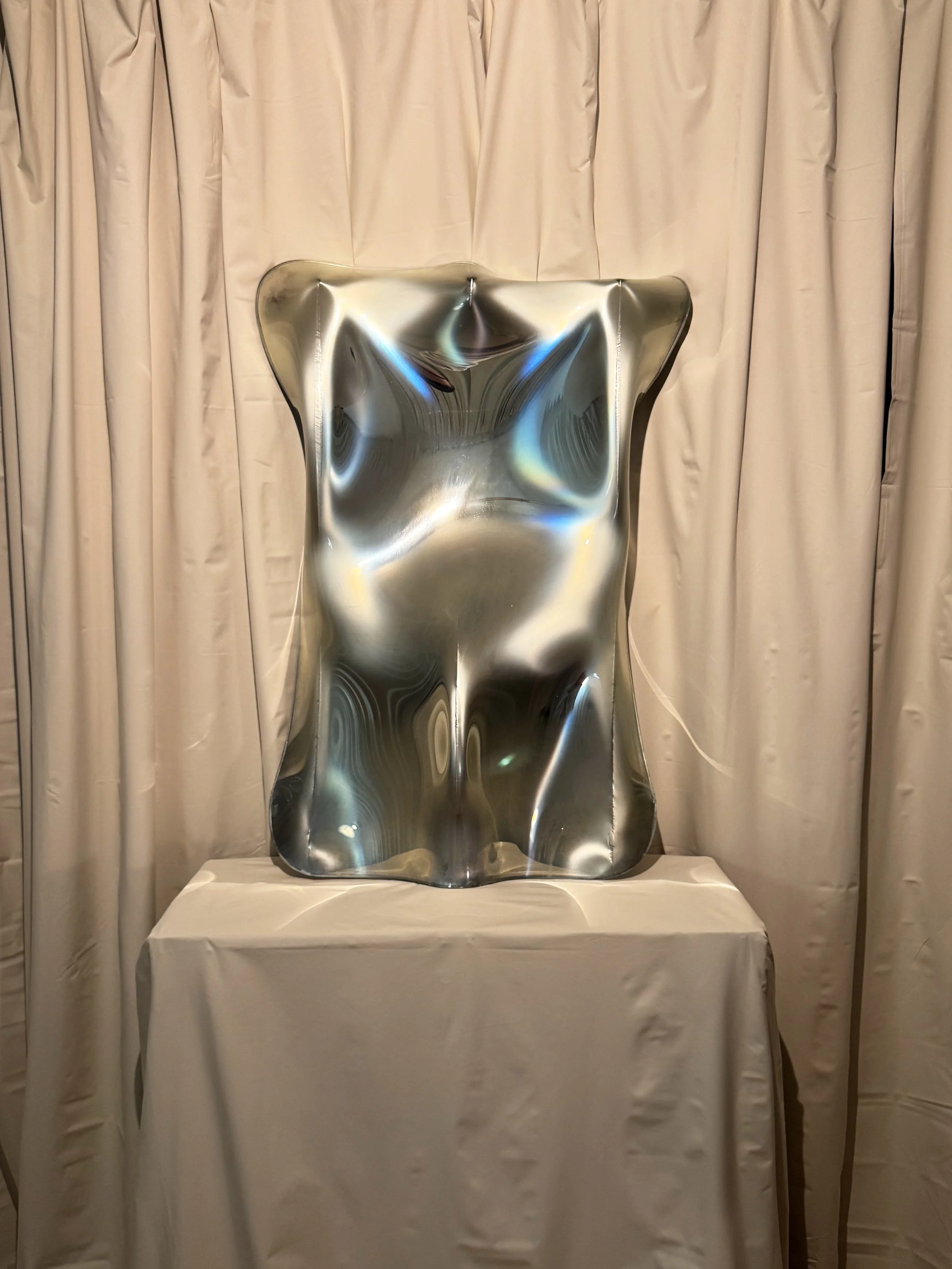
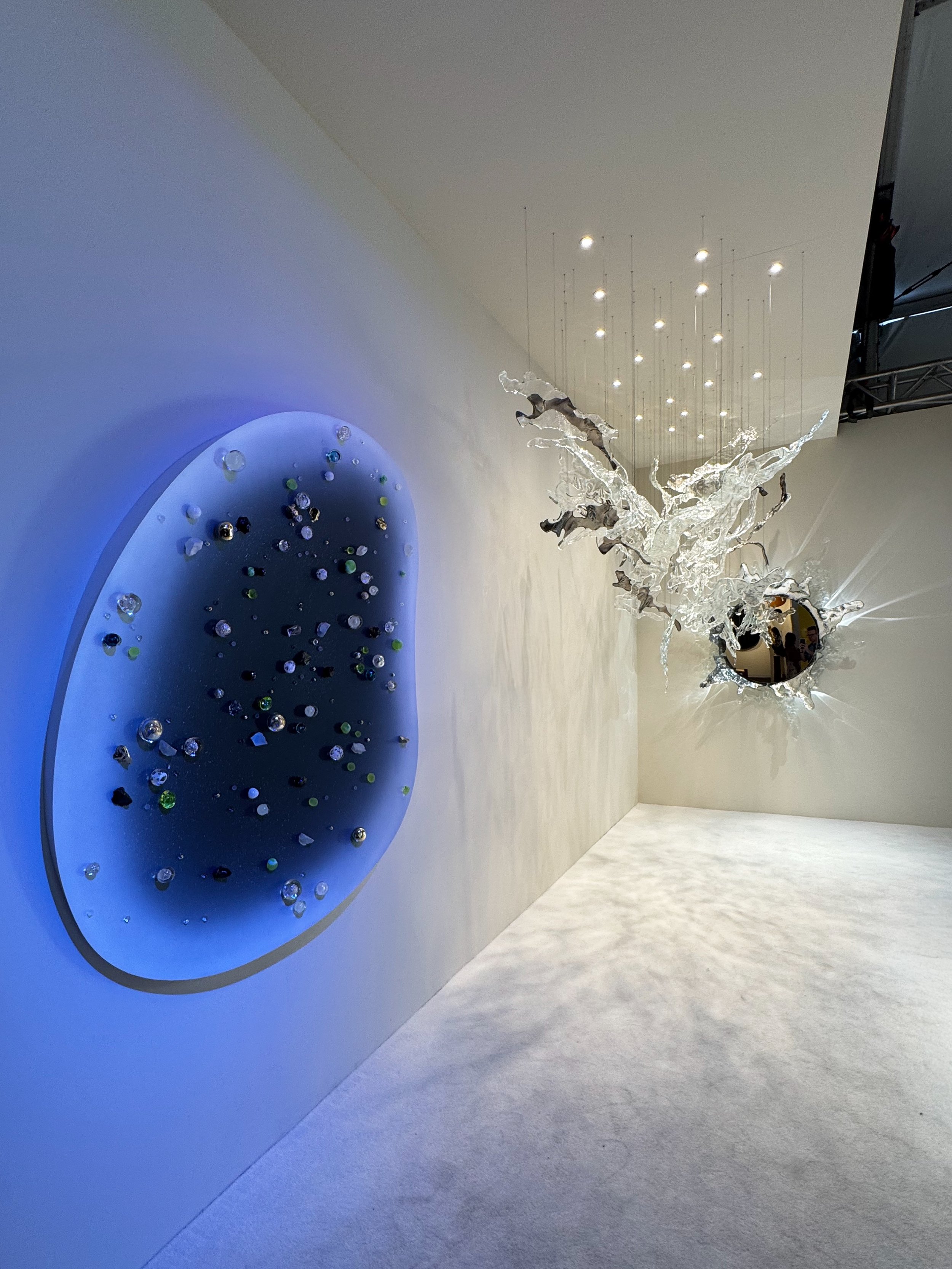
Also on display, the ONDARA Mirror employs a slumped-glass technique with recycled glass that naturally settles into fluid, wave-like forms. The mirror’s silhouette evokes the motion of water and the graceful glide of manta rays, inspired by Sūna’s diving experiences in the Pacific Ocean. A vacuum silver coating adds an iridescent, light-breaking surface that shifts with perspective, creating subtle plays of colour and depth reminiscent of marine life. Each mirror is one-of-a-kind, offering an immersive reflection of nature’s rhythms while highlighting Sūna’s mastery of material and form.
The fluidity and responsiveness of Sūna’s work, whether capturing the ephemeral beauty of the sky or the gentle motion of the ocean, make her installations mesmerising, inviting viewers to engage with light, material, and space in profoundly sensory ways.
LCD Textile
Returning to Alcova Miami 2025 with a new presentation, LCD Textile once again demonstrated the poetic potential of material-led experimentation. The studio unveiled a striking multicoloured sculptural work that transformed textile into an object of presence, shifting fabric away from its conventional, functional associations and into the realm of contemporary art.
Belgian-born textile research consultant Luc Druez has long operated at the intersection of industry and artistry. Working with both natural and technical fibres, his practice explores how materials respond under light, emphasising texture, translucency, and chromatic depth. As an artistic director in textiles, Druez has collaborated with leading Haute Couture houses, offering a reimagined approach to one of the world’s oldest textile languages.
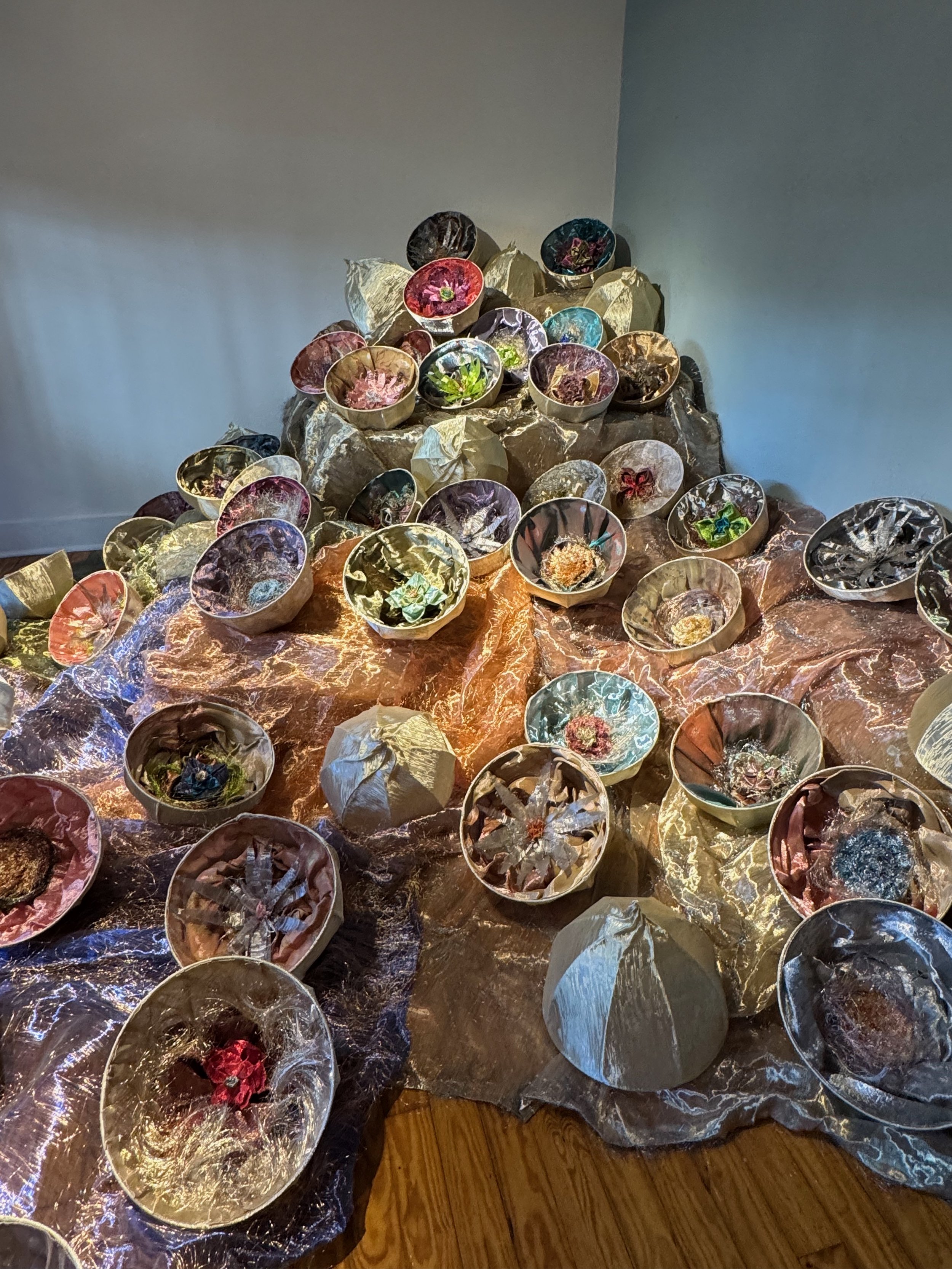
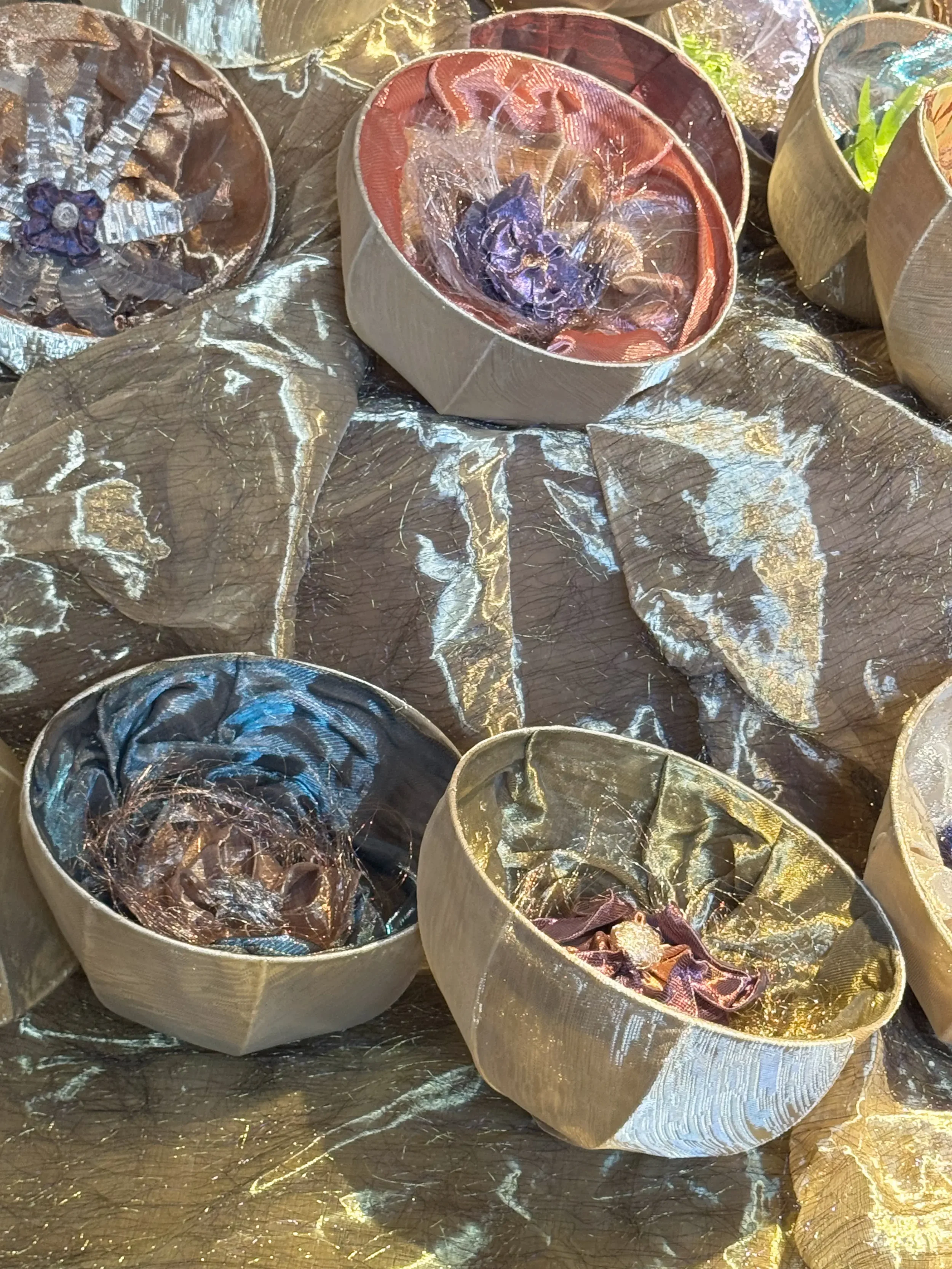
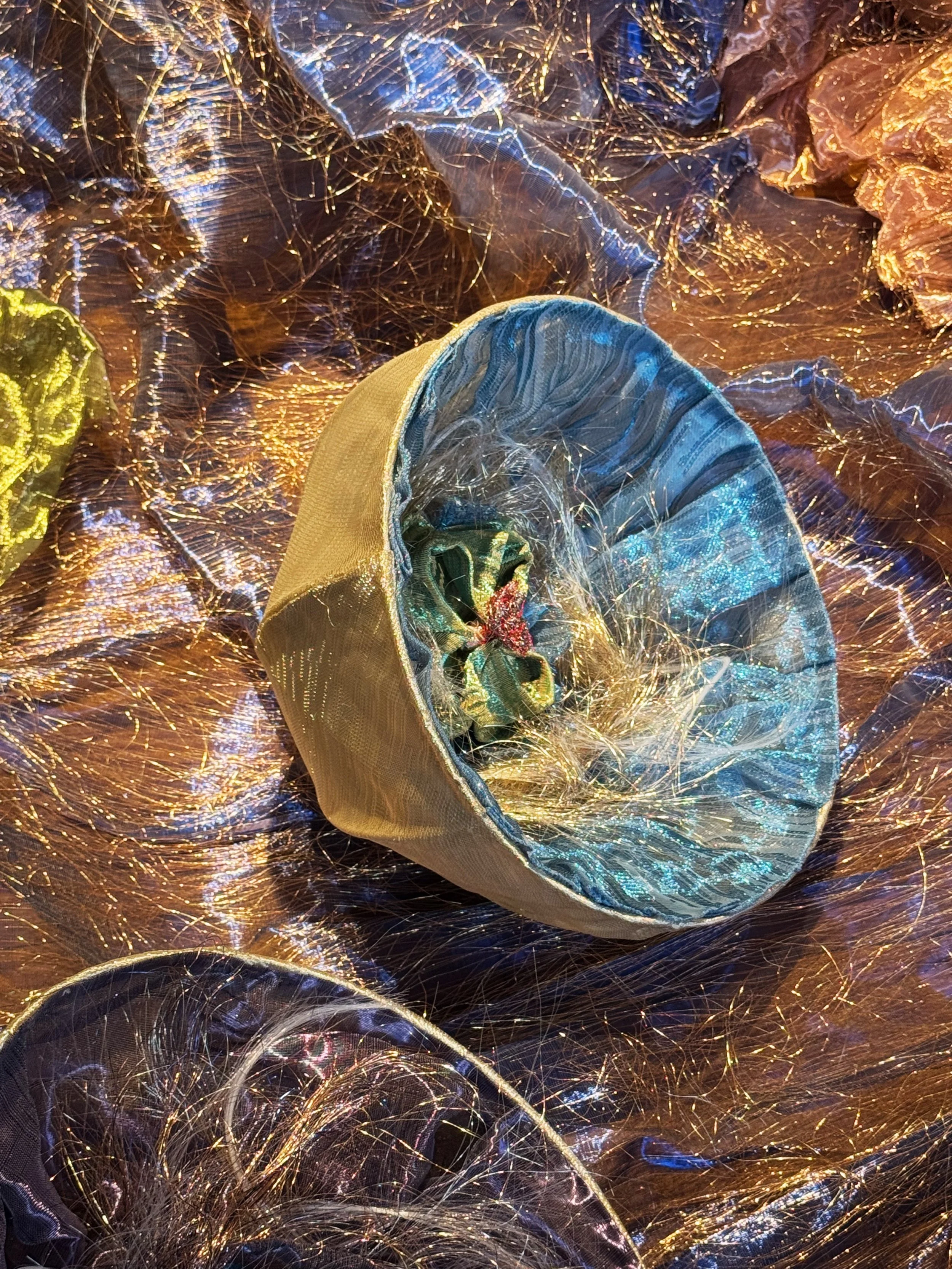
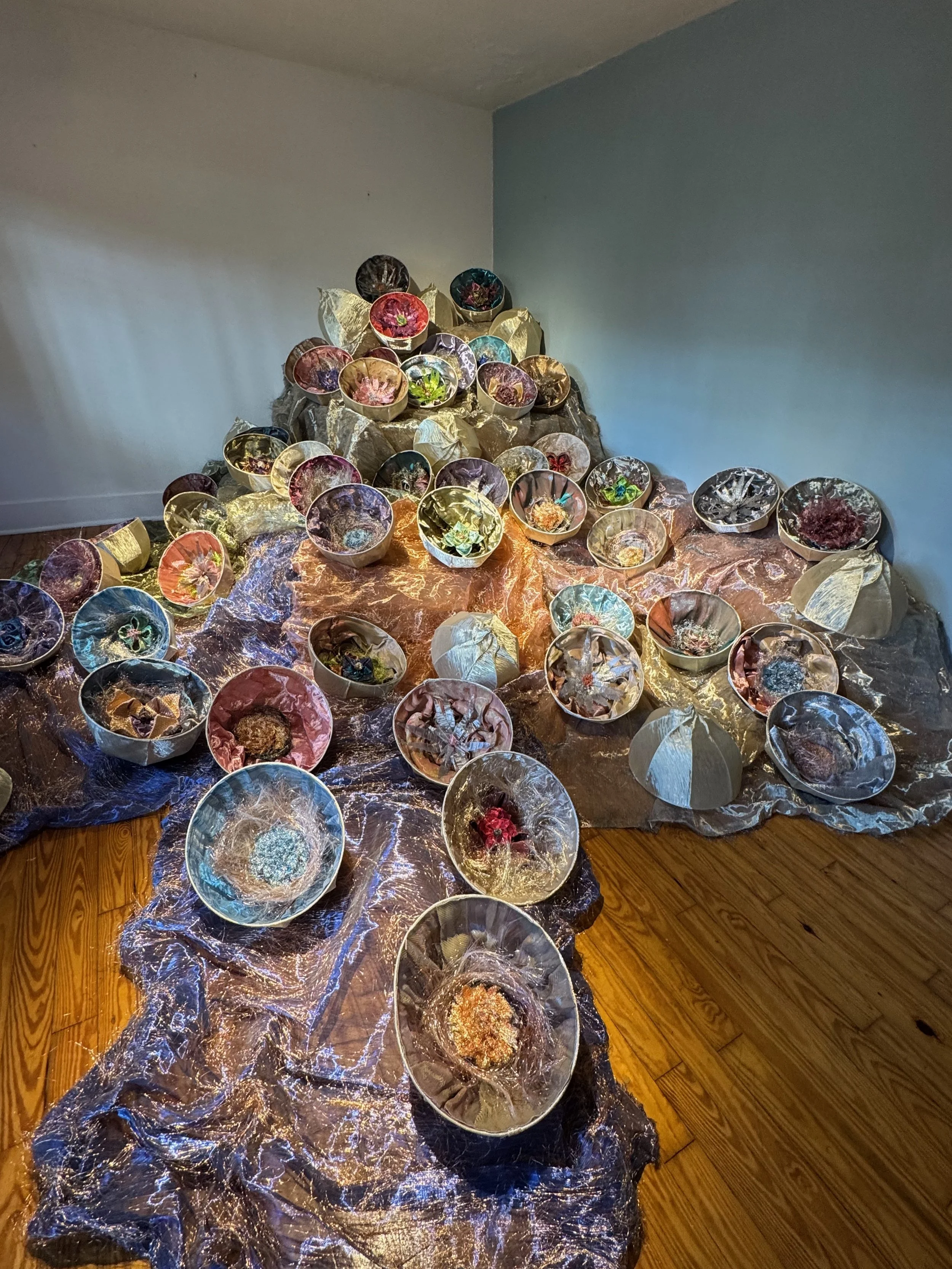
Since 1992, Druez has also developed his personal LcD Collection, a handmade body of work composed entirely of technical fibres reinterpreted through a distinctive jacquard process. Fishing lines, raffia, rubber, copper, and even horsehair are woven together, their industrial origins elevated through craft, precision, and experimentation.
What makes LCD Textile’s Alcova presentation particularly compelling is the way familiar materials are recontextualised into something sculptural and expressive. The work does not simply demonstrate technical mastery; it invites a new way of seeing textile itself. By using surface, finish, and structure to build form, the piece adds layers, both literal and figurative, transforming fabric from something familiar and utilitarian into an object that feels immersive, unexpected, and richly dimensional.
AB+AC — Alma Mater
AB+AC presented Alma Mater, a collection of limited-edition objects conceived for ritual, mindfulness, and quiet contemplation. Meticulously produced in collaboration with Italian and Portuguese artisans, the collection reflects a deeply architectural approach to scale, material, and spatial presence, transforming everyday objects into moments of stillness.
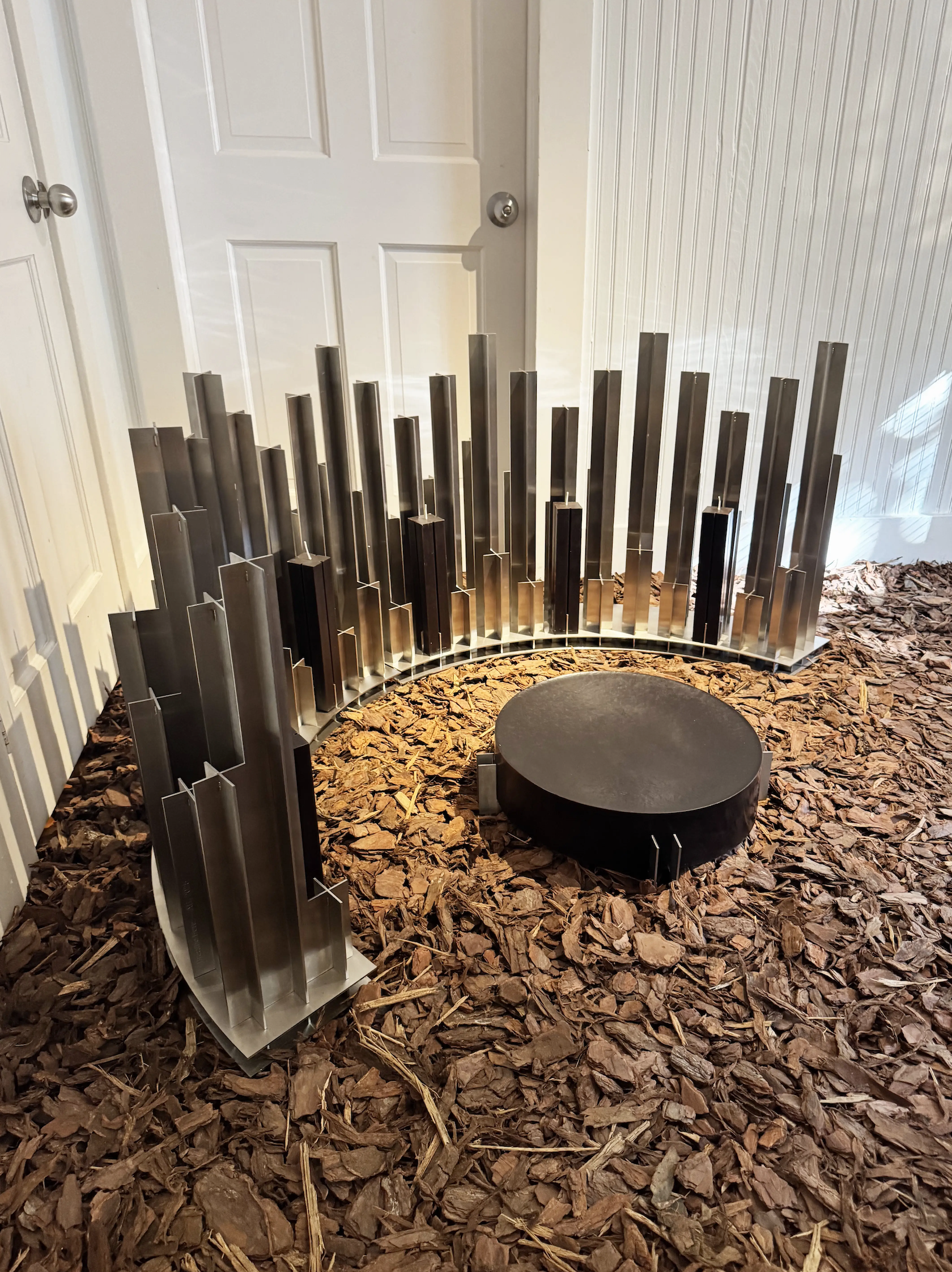
Alma Mater is anchored in the convergence of light, material, and form. Stainless steel provides structural clarity and weight, while hand-engraved beeswax candles introduce warmth, scent, and tactility. From micro-welded frameworks to finely finished surfaces, each piece celebrates the intimacy of craftsmanship and the collaborative dialogue between designer and artisan.
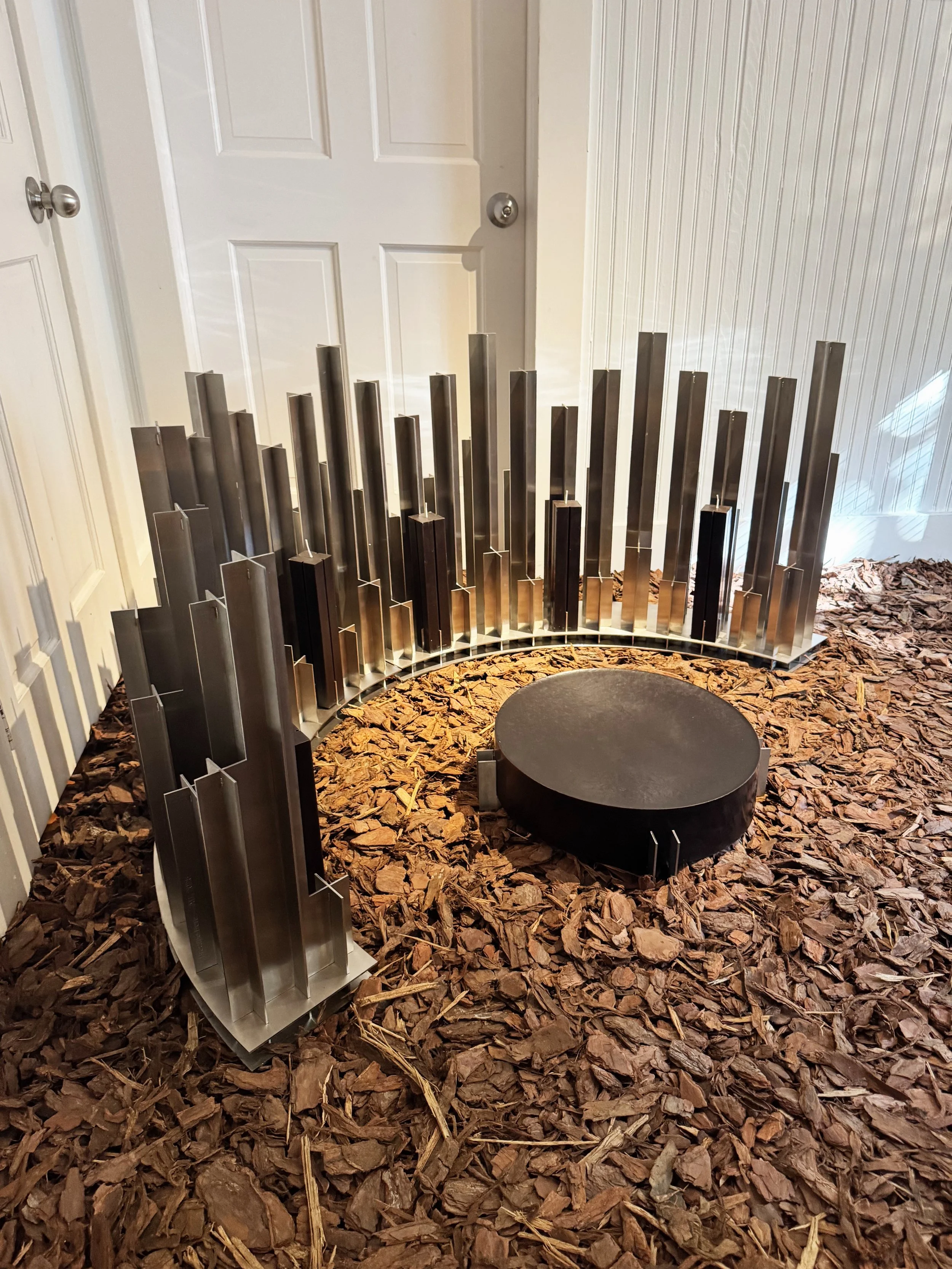
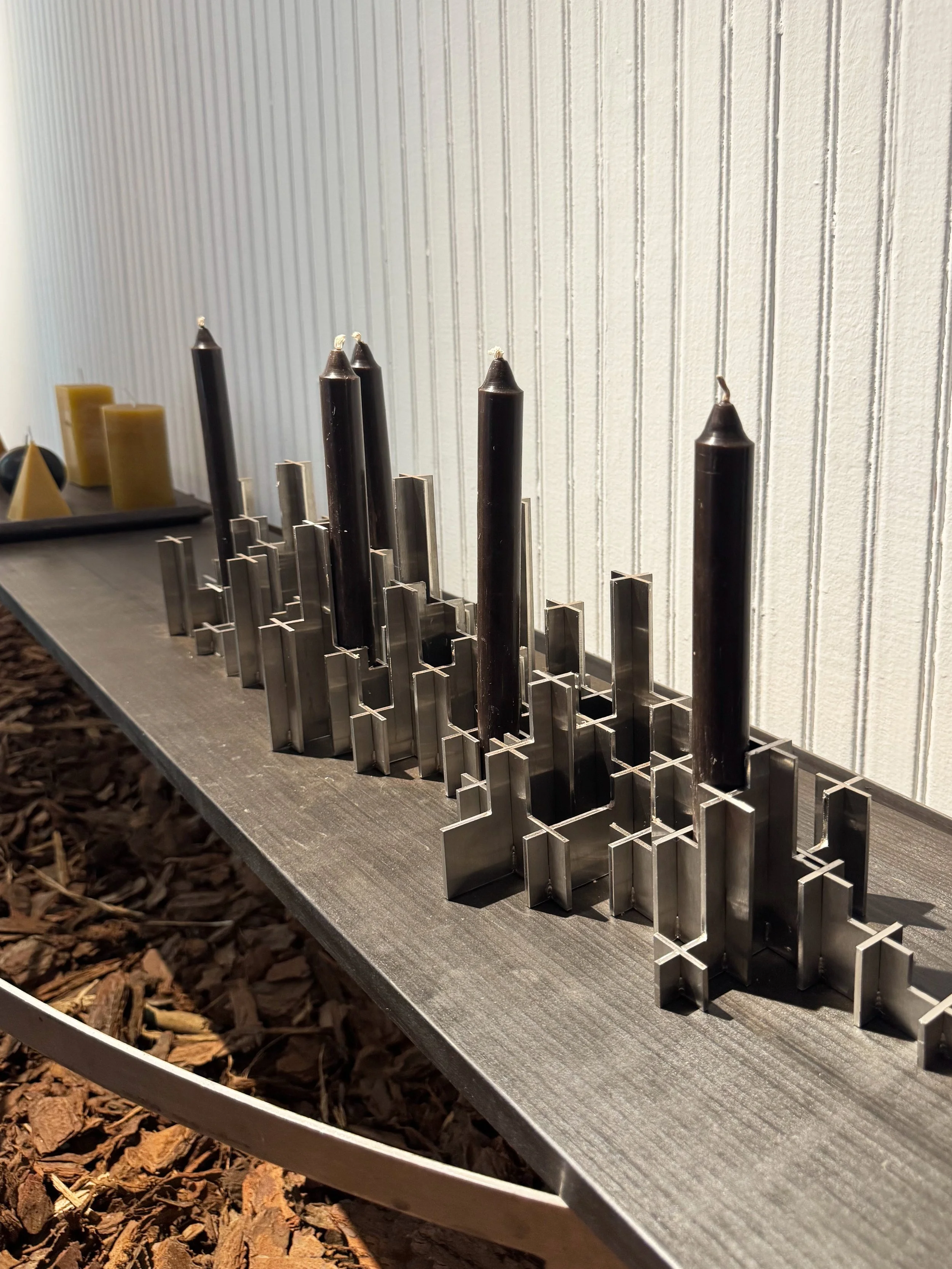
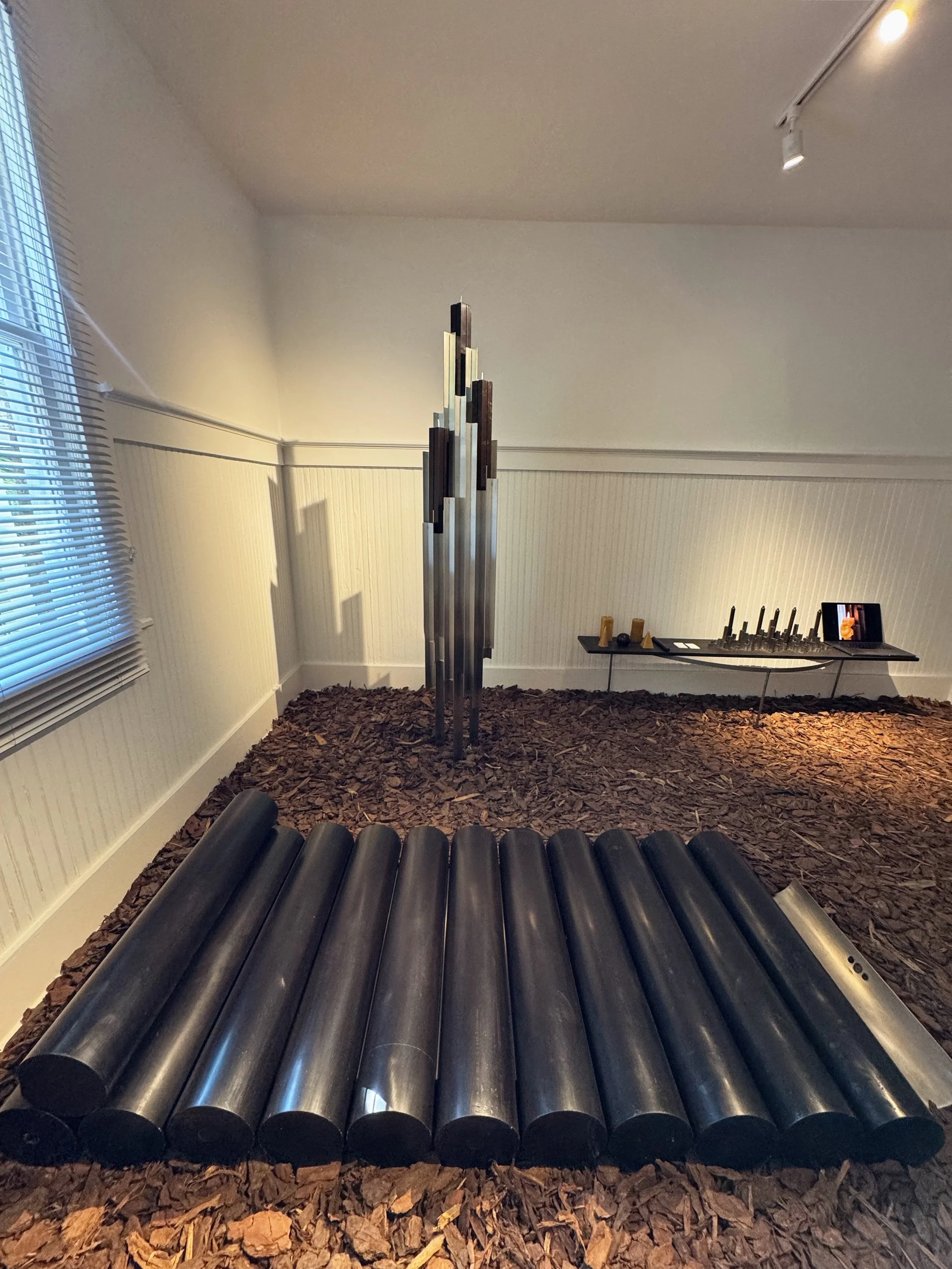
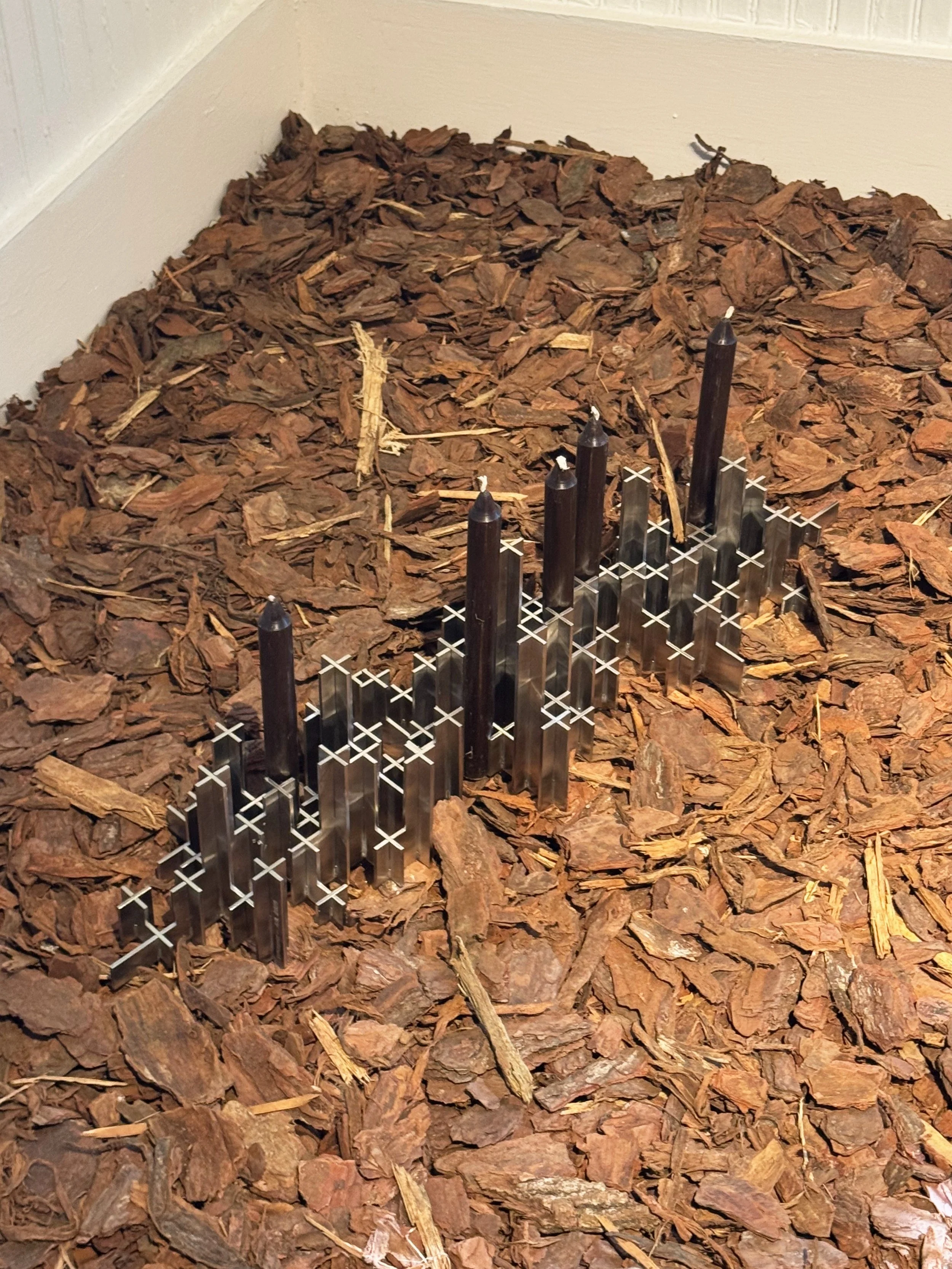
The collection comprises six objects, each carrying a subtle yet considered message. Totem, a sculptural candle holder, balances permanence and ephemerality through the slow transformation of wax and flame. Daybed offers a beeswax therapy bed, an object designed for personal reflection and pause. Dome, a playful three-dimensional mirror, invites moments of self-compassion, while Ring paired with Stool I reframes prayer and meditation as a sensual, performative act. Completing the collection, Line is a small-scale candle holder intended for intimate, everyday rituals.
There is something particularly compelling about witnessing architects transition into furniture and accessory design. Their work often carries a distinct presence, informed by spatial thinking, proportion, and material restraint, and Alma Mater embodies this sensibility with clarity and intention. Rather than simply creating objects, AB+AC shapes atmospheres, offering a collection that feels both grounded and quietly transformative.
Alcova Miami 2025 once again proved why it remains one of the most inspiring platforms in contemporary design. Unlike larger fairs that often spotlight established names, Alcova embraces experimentation, material exploration, and new ideas, offering both emerging and visionary designers a space to present work that challenges conventions. It is this commitment to the latest and the unexpected that makes the fair so compelling; from sculptural furniture to innovative lighting, from tactile materials to conceptual artistry, every installation invites discovery. For visitors and collectors alike, Alcova provides not just objects to admire but also a gateway to the next generation of design, reminding us that innovation, craft, and curiosity are at the heart of how we experience and define the spaces around us.
More Stories